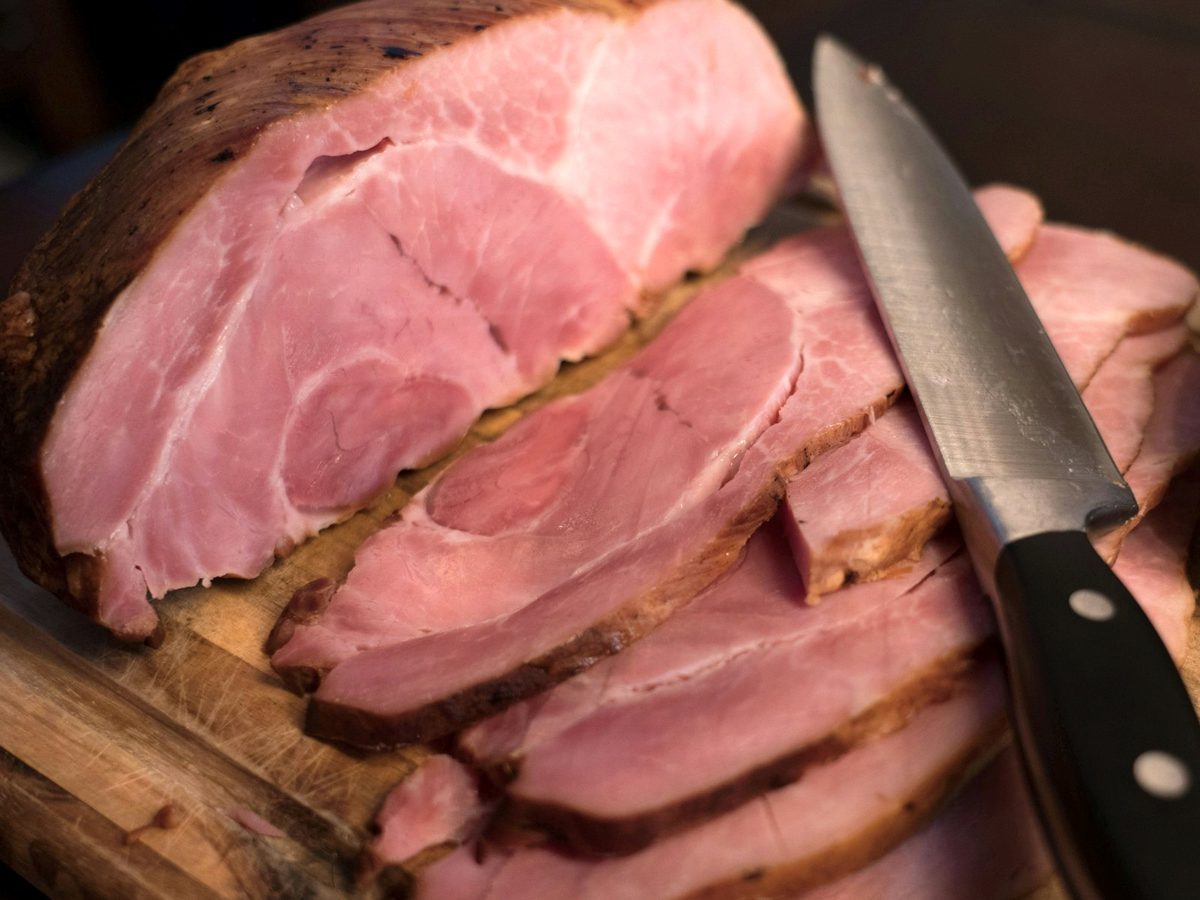
When a French recipe says jambon, it means jambon blanc: cooked, lightly salted and not smoked. In Canada, buy unsmoked cooked ham, like Italian prosciutto cotto, and skip anything smoked, honey-glazed or maple.
Which pre-sliced pack is closest to jambon de Paris?
Prosciutto cotto, Italian cooked ham, is the closest thing in the cold case. Mastro Prosciutto Cotto extra lean (125 g) is listed at Voilà by Sobeys, and Real Canadian Superstore sells Mastro lean prosciutto cotto thin-sliced at the deli. It's normally unsmoked, but read the label anyway.
Read every ham label for “smoked” or “smoke flavour”. Black Forest is smoked, and so is toupie ham, the round ham sold all over Quebec: Lafleur, Royal Toupie and Gaspésien toupie hams are all labelled smoked. At a Quebec deli counter, ask for jambon cuit non fumé, and tell them how thick you want it.
Skip honey- and maple-glazed hams too. The glaze sweetens a croque-monsieur and catches in a hot oven.
How thick to slice it
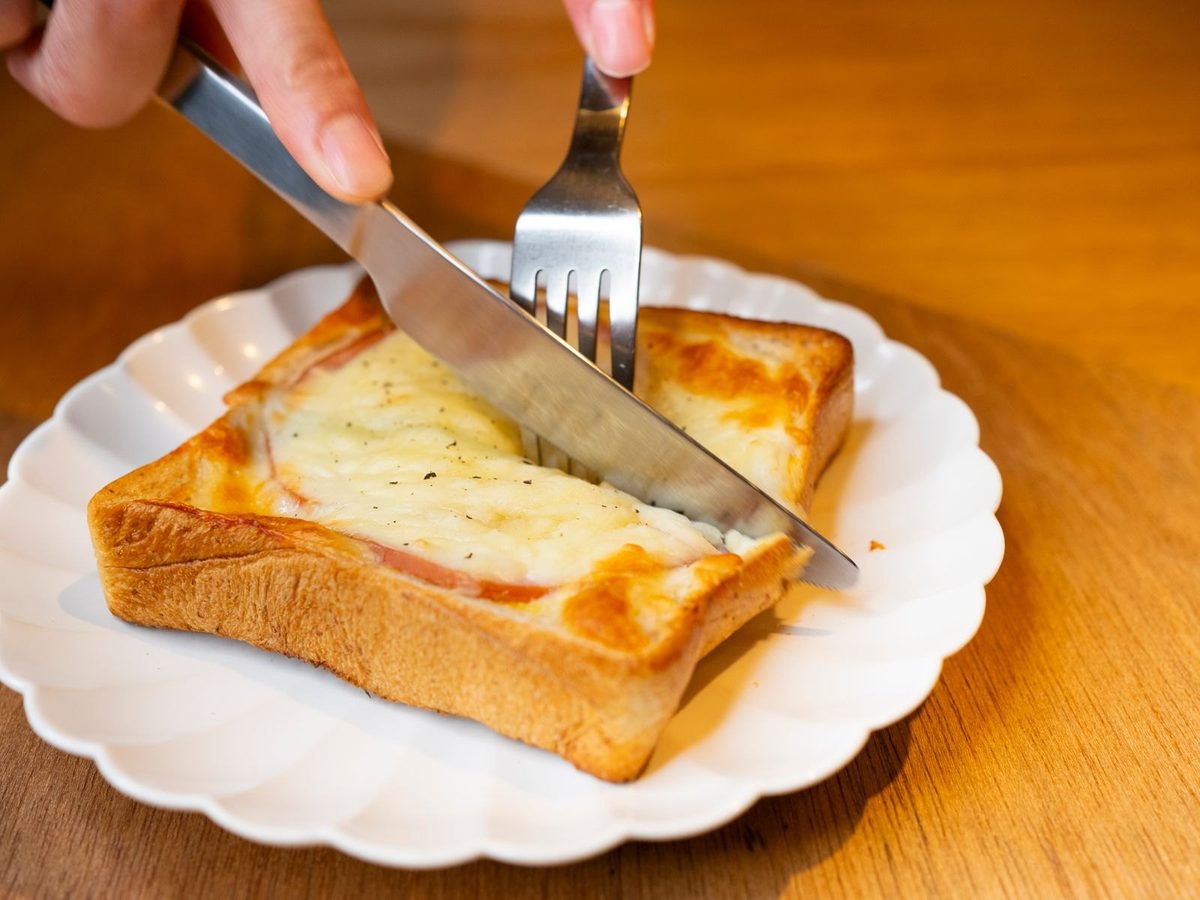
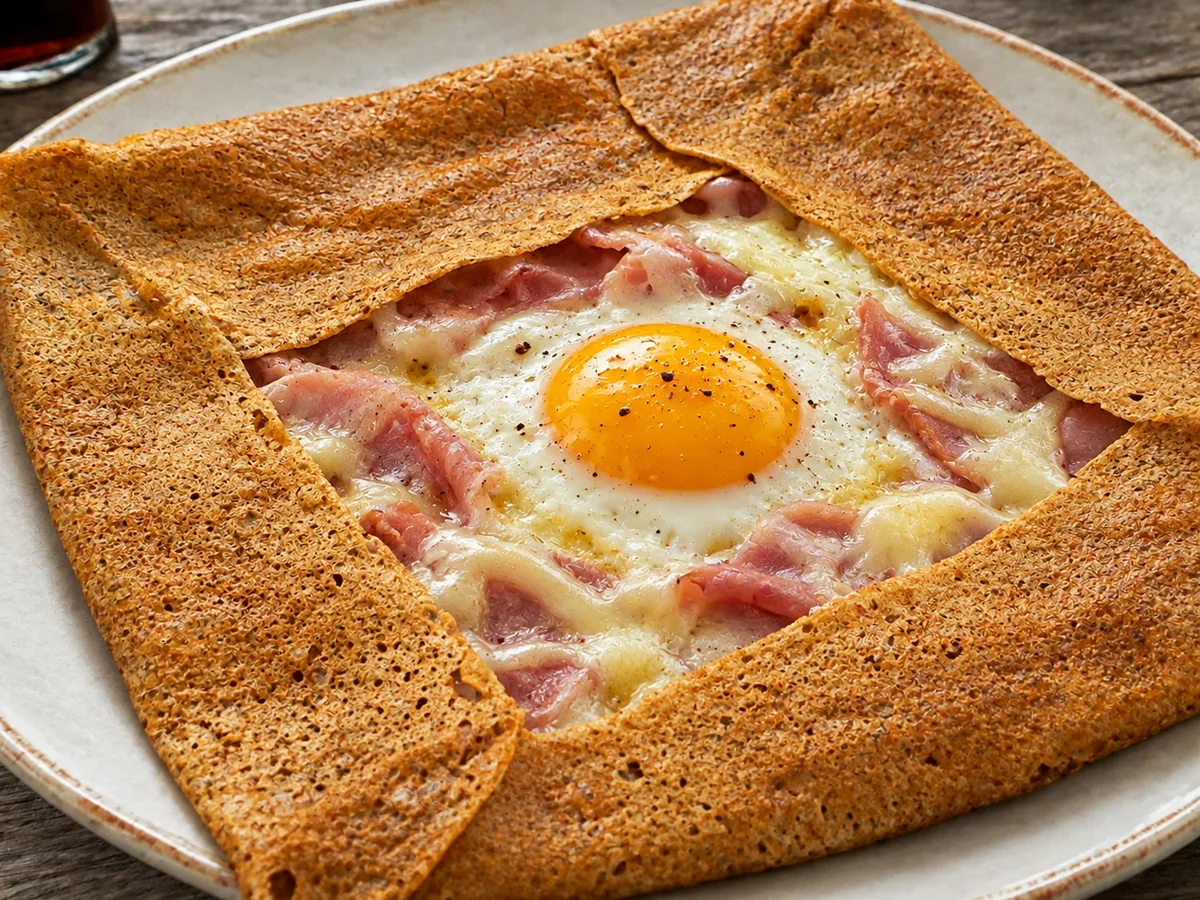
- Croque-monsieur and galette complète: thin, one slice per sandwich or galette, about 40 g. It lies flat and heats through in the time the cheese takes to melt. See the croque-monsieur and the galette complète.
- Endives au jambon: one slice per endive, wrapped around the whole braised head, so ask for about 3 mm. Thinner tears when you roll it, and thicker won't close around the endive. See the endives au jambon.
Pre-sliced packs are cut thin, which suits a croque. For endives, the deli counter is worth the wait.
Why smoked ham is the wrong swap for jambon blanc
Smoke takes over a dish. In a croque-monsieur or a galette, smoked ham masks the cheese and the béchamel, and the dish stops tasting the way it does in France.
Plain cooked ham is there for salt and softness; the Gruyère and the béchamel carry the flavour.
Black Forest isn't the same ham on both sides of the Atlantic
German Black Forest ham is raw, dry-cured and smoked, eaten in thin slices like jambon cru. The Black Forest ham at a Canadian deli is cooked and smoked, with a dark outside.
So the Canadian one is closer to an Alsatian jambon fumé cuit than to anything German. Use it when a recipe wants smoked cooked ham, never for jambon blanc.
When a recipe wants jambon fumé
Smoked pork is everyday cooking in Alsace and Lorraine: a choucroute garnie is built on it. For sliced smoked cooked ham, Canadian Black Forest from the deli is the easiest find.
A real jambon fumé, the kind an Alsatian butcher slices off the bone, costs an arm and a leg here when you find one at all. So most of the time I use cheap sliced ham from the cold case: smoked Black Forest when the recipe wants smoke, plain cooked ham for a croque-monsieur.
In a choucroute the sauerkraut and the smoked sausages carry most of the flavour, so a cheaper ham hardly changes the dish, and the money is better spent on the sausages. Where the ham is the star, on a board or in a sandwich, a deli-counter piece sliced to order is the step up.
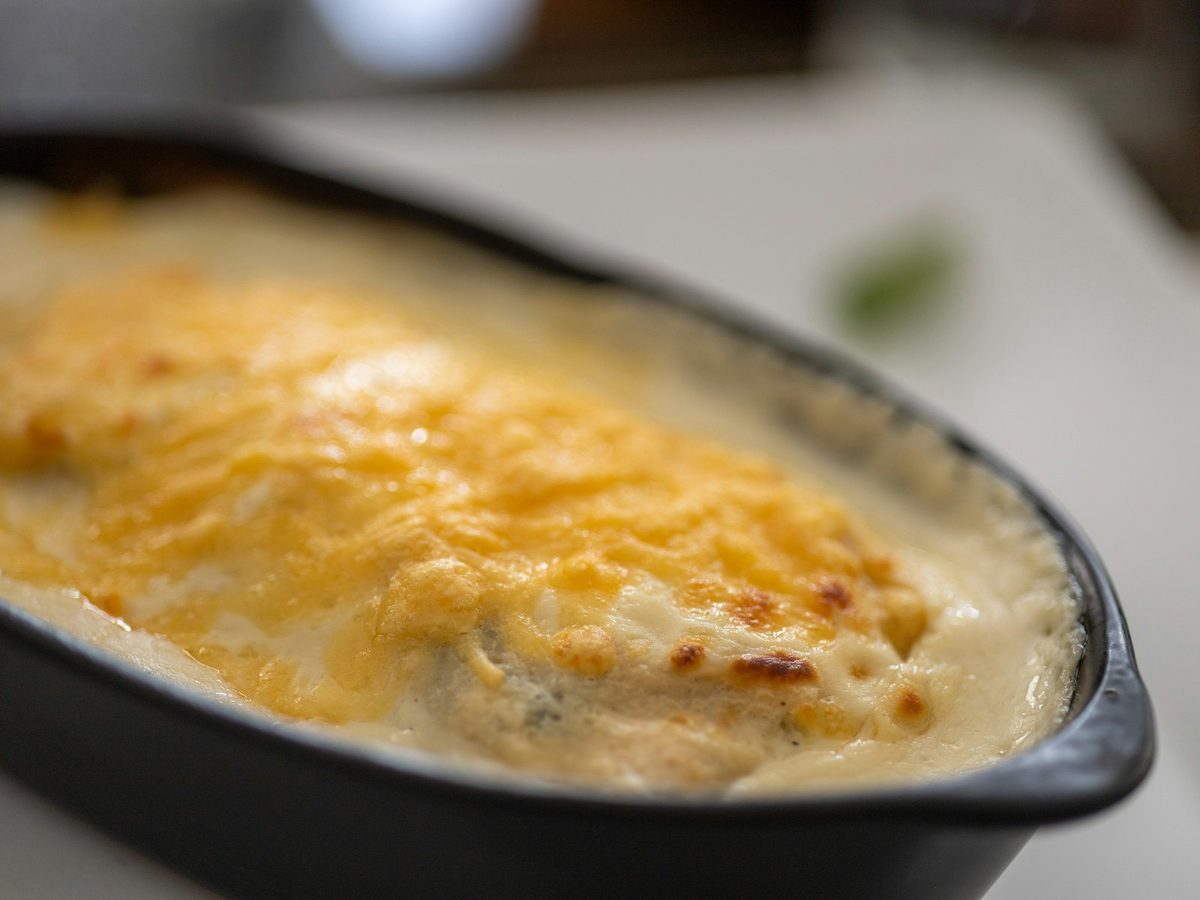
For a piece to slice or dice yourself, a toupie works well: Royal Toupie quarter ham (700 g) and Gaspésien toupie (750 g) are sold at Maxi, and Lafleur toupie-style smoked ham (1 kg) is listed on Walmart.ca. Diced, it does the job of the smoked ham in a quiche or a gratin.
Jambon cru: prosciutto or Serrano
Bayonne, Savoie and Auvergne hams are salted and air-dried, then eaten raw in thin slices. Italian prosciutto and Spanish Serrano are the same family, with the same texture, and most deli counters carry at least one.
Cooking changes them. Laid on a tart or a galette in the oven, prosciutto crisps and tastes saltier, so add it after baking unless you want it crunchy. On a raclette board it goes on cold, which is how the French eat jambon cru too.
Buy it sliced to order if you can. Pre-sliced packs are fine for a board, but the slices stick together and tear when you separate them.