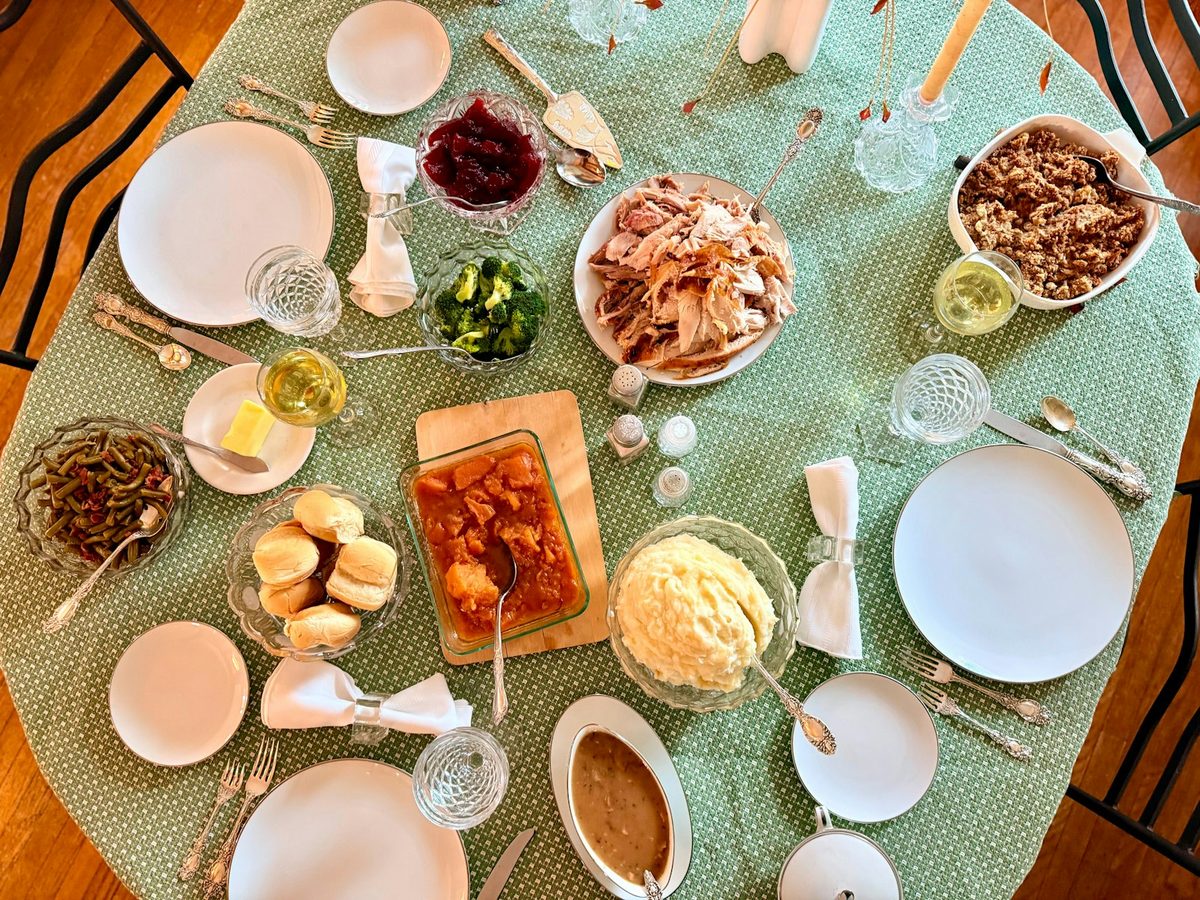
My first Canadian Thanksgiving was turkey, the way everyone here expects it, but with a French-style gravy: the roasting juices deglazed and reduced, not a thick flour sauce. It's an easy way to bring France to the table: keep the bird and change what goes with it.
Gravy is where the two kitchens part ways. Canadian gravy is thickened with flour until it coats the mashed potatoes; a French jus is thinner and tastes mostly of the roast. Both are good, but if you grew up with jus, the thin one is what makes it feel like home.
France has no Thanksgiving: no long weekend in October and no pumpkin pie. So when Canadian Thanksgiving comes round on the second Monday of October, a French cook has a free hand: keep the idea, a big autumn meal with the people you like, and fill the table with French dishes.
Why don't the French celebrate Thanksgiving?
Thanksgiving is a North American harvest holiday. The French autumn calendar runs differently: la rentrée in September, la Toussaint on 1 November, then Christmas. The big family meals in France are the Christmas Eve réveillon and New Year's Eve.
What surprises a French newcomer at a Canadian Thanksgiving
- A whole turkey in October. In France, turkey escalopes and rôti de dinde are everyday meat, but the whole roast bird, stuffed with chestnuts, belongs to Christmas. Here it comes out in October and again in December.
- Pumpkin for dessert. French cooks put squash in soups and gratins. A sweet, spiced pumpkin pie has no French equivalent.
- Cranberries with meat. Cranberry sauce isn't a French habit.
- A Monday off. It's a long weekend, so the meal can land on Saturday, Sunday or Monday.
A French take on Thanksgiving borrows the occasion and cooks what a French family would make for a Sunday lunch in autumn.
A French Thanksgiving menu for six
Four courses, in the French order. Here's what goes in the cart for each.
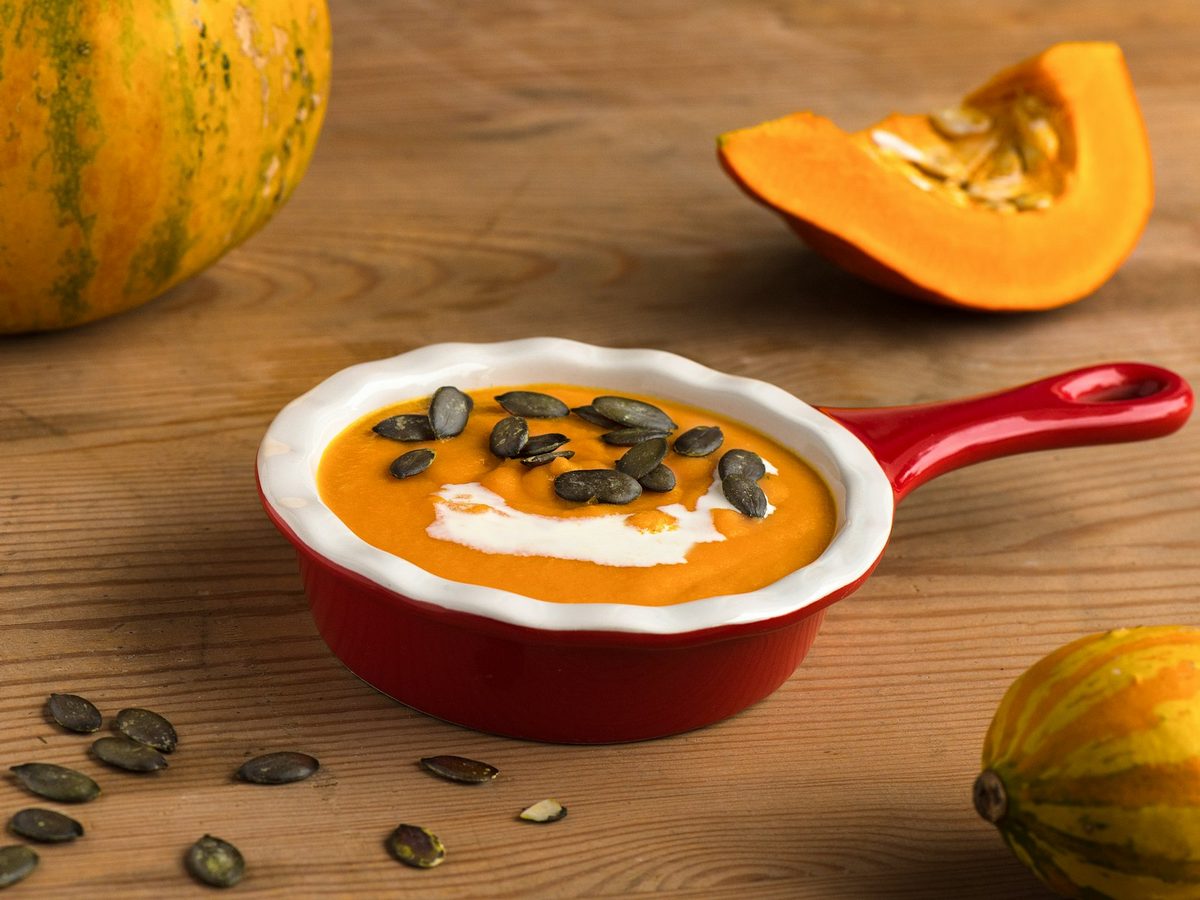
- Starter: [pumpkin soup](/recipes/soupe-de-potiron). The French use potiron, a red-orange pumpkin you rarely see here. Buy a kabocha, the squat dark-green squash with orange flesh, about 1.5 kg; butternut works too. Skip carving pumpkins: they're watery and make a thin soup.
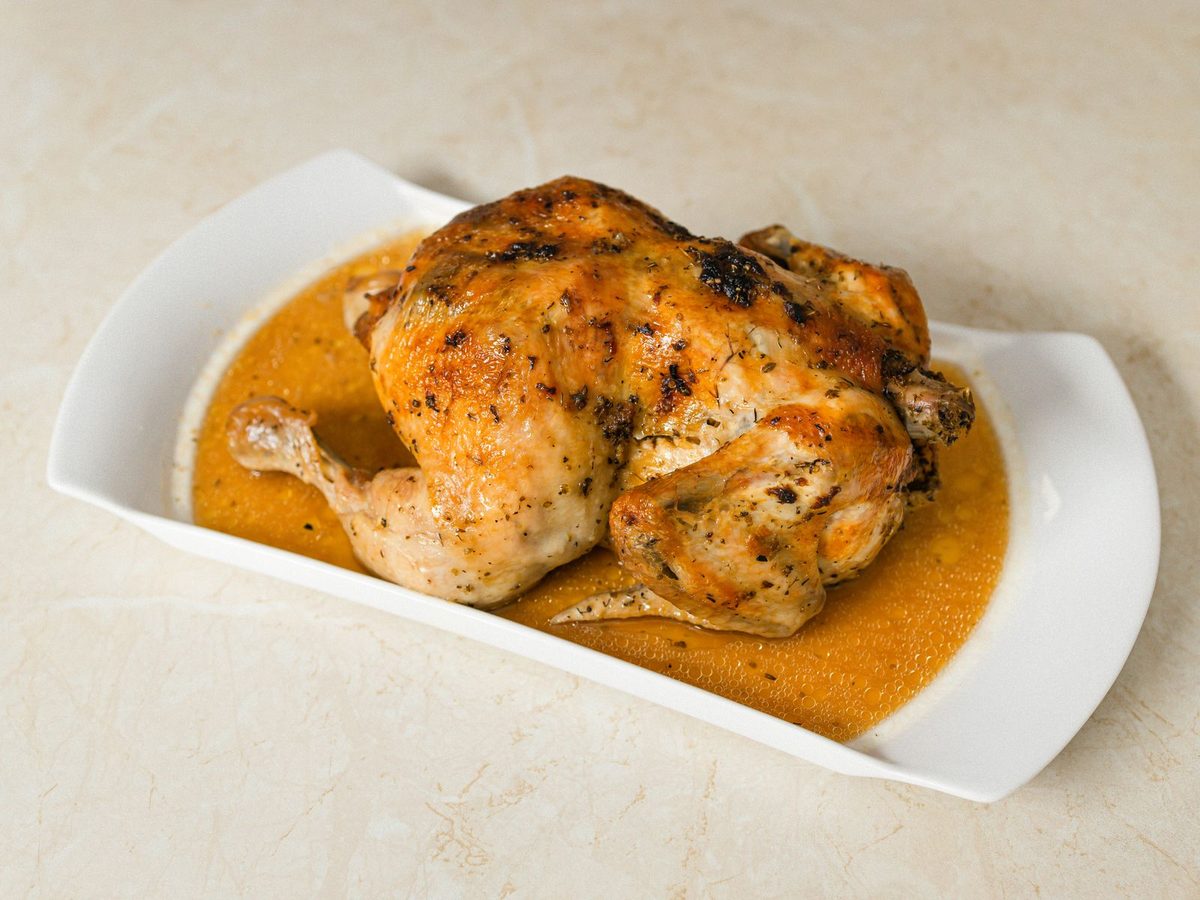
- Main: a roast turkey with a French jus. A 5 to 6 kg turkey feeds six with leftovers. Most turkeys here are sold frozen: thaw it in the fridge, allowing about 10 hours per kg (2 to 3 days for 5 to 6 kg), or order a fresh one ahead. Prefer chicken? Roast two air-chilled 1.6 to 1.8 kg birds (French roast chicken): President's Choice Air Chilled Whole Chicken at Loblaws, Real Canadian Superstore and Maxi, or Maple Leaf Prime at Voilà by Sobeys.
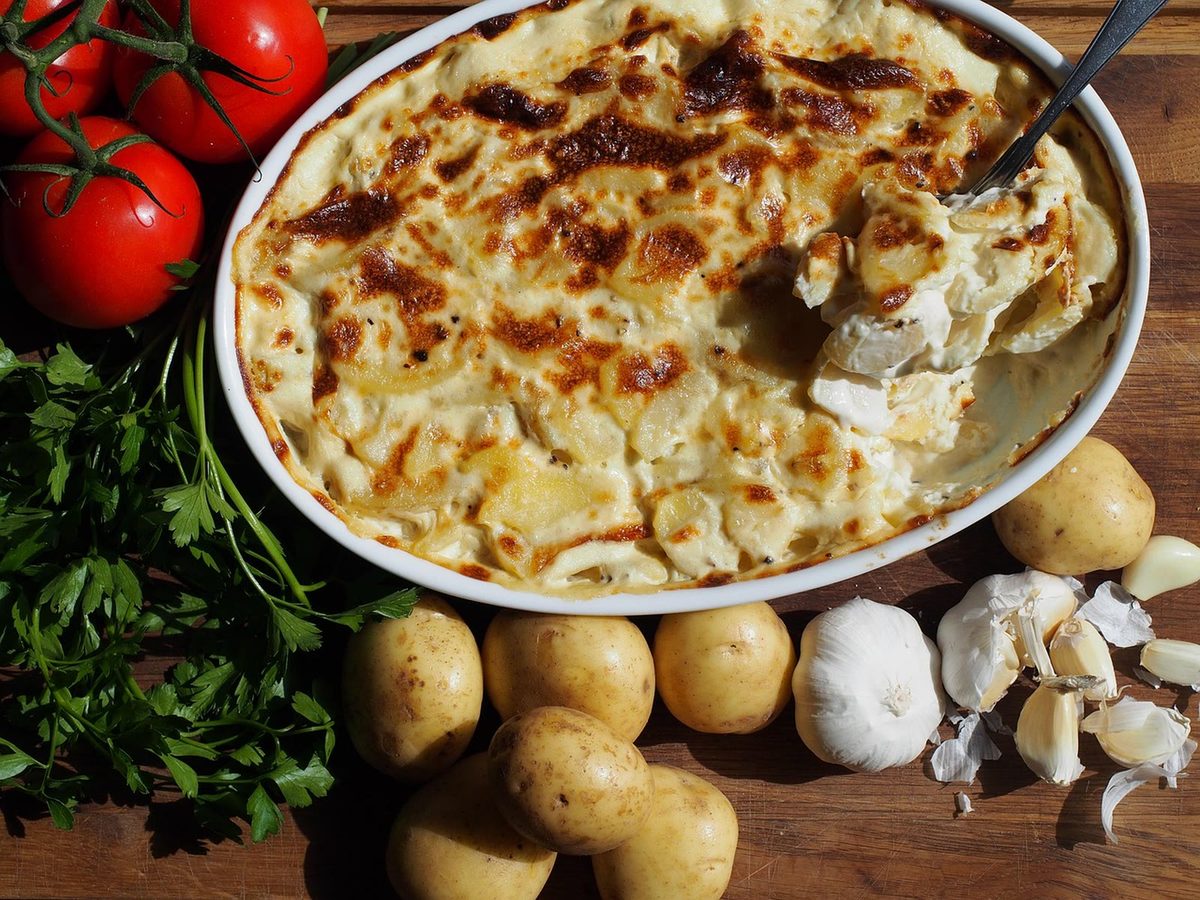
- Side: [gratin dauphinois](/recipes/gratin-dauphinois). Yukon Gold potatoes, 3.25% milk and 35% whipping cream, which doesn't split in a long bake. It's the side most French people would pick for a roast.
- Cheese, after the main and before dessert. Three is plenty: a Comté (Président Le Montarlier at Walmart, Jura Flore at Metro), an Oka for a Quebec washed rind, and a soft bloomy-rind cheese like a brie. The cheese guide has more.
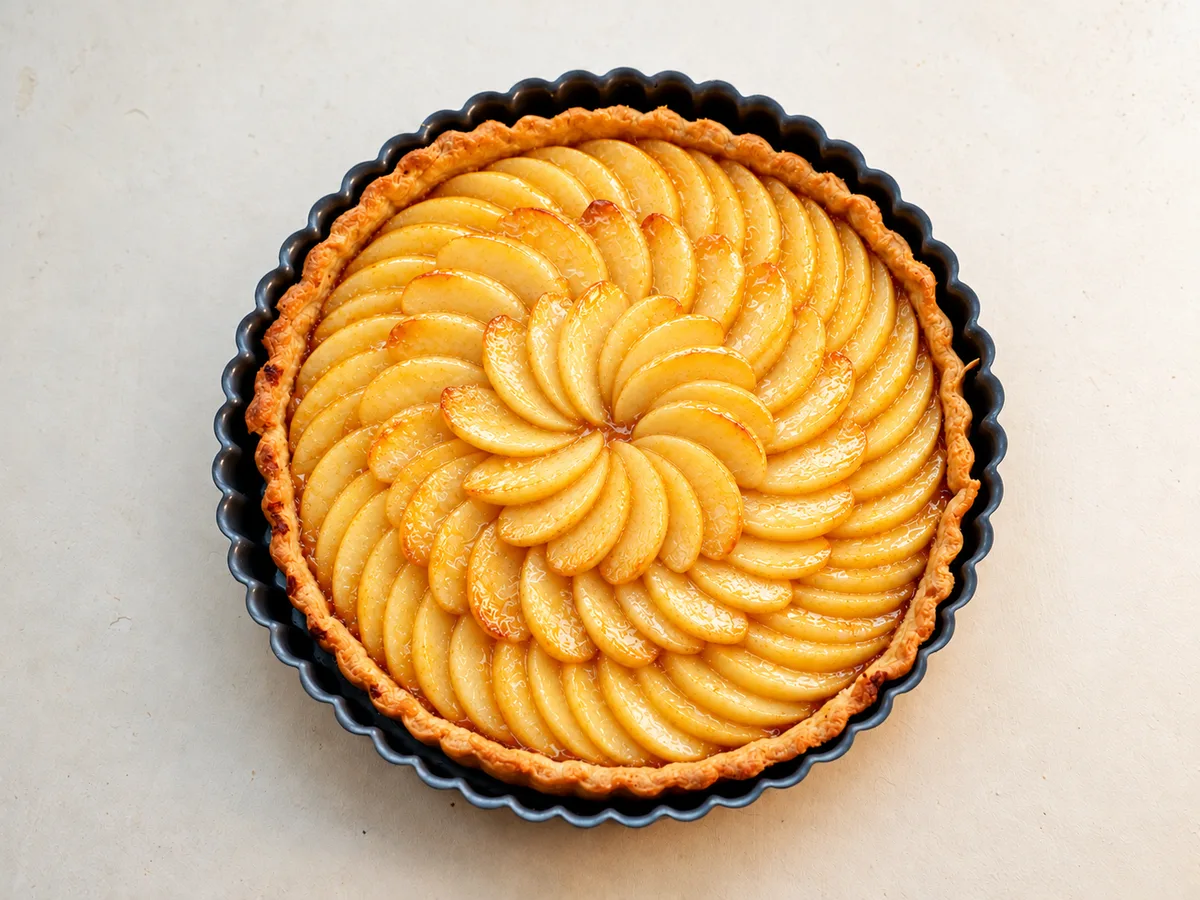
- Dessert: [French apple tart](/recipes/tarte-aux-pommes). The Alsatian version: apples arranged in the pastry, then an egg, cream and sugar custard baked around them. Golden Delicious, as in the recipe, holds its shape in the custard; Honeycrisp works but gives off more juice.
What to drink
A light red suits roast turkey or chicken: a Gamay, like Cave Spring Gamay VQA or Georges Duboeuf Beaujolais-Villages at the LCBO, or Miss Gamay Beaujolais-Villages at the SAQ. For white, a dry Riesling or a Muscadet. The wine guide covers what to look for in each province.
Pastry and butter
The tart's butter shortcrust is homemade, and it takes 10 minutes plus chilling. Frozen pie shells here are made with lard or shortening (Tenderflake sells both, so read the box), and they don't taste like a French pâte brisée.
Regular unsalted butter is all this shortcrust needs; the butter guide explains when 82% is worth paying for.
Feeding a bigger crowd
Past eight people, a French cook would add a dish that waits happily: bœuf bourguignon or a pot-au-feu, both better made the day before and reheated on the stove. Bake the gratin in two dishes side by side, and make two tarts.
A turkey already stretches to eight; past that, roast a second bird or add a braise.
How do you make a French-style gravy?
A French jus is made in the roasting pan, from the juices of the bird and nothing else. It works the same for two chickens or a turkey.
- Lift the bird onto a board to rest and tip the pan. Spoon off most of the clear fat, keeping the brown juices underneath.
- Set the pan over medium heat and pour in about 250 mL of water, dry white wine, or half and half (use 500 mL for a turkey). Scrape up every brown bit stuck to the pan with a wooden spoon: that's where the flavour is.
- Simmer until it has reduced by about a third and tastes rich, 5 to 10 minutes. Add the juices that run out of the resting bird, then season and strain.
- Thicken lightly at most. Swirl in a knob of cold butter off the heat for shine, or whisk in 1 teaspoon of cornstarch mixed with a spoonful of cold water and bring it back to a simmer. It should coat a spoon thinly, not stand in a ladle.
For a turkey, there's more juice and more fat, so skim patiently. If the pan juices are scant, add a little chicken stock instead of water.
Roasting the turkey
A 5 to 6 kg turkey feeds six with leftovers. It roasts at 160°C (325°F), the same temperature as the gratin, so the two can share the oven. If you roast two chickens instead, use the one-oven plan below.
- Roast the turkey at 160°C (325°F), roughly 3 to 3½ hours for an unstuffed 5 to 6 kg bird, longer if stuffed. Go by the thermometer, not the clock: it's done when the thickest part of the thigh, not touching the bone, reads 82°C (180°F). Health Canada's safe minimum for whole poultry is 82°C (180°F).
- Count back from dinner: for the main course at 6:30, take the turkey out of the fridge at 2:00 and put it in at 2:30. It comes out between 5:30 and 6:00 and rests under foil for 30 to 45 minutes.
- If the oven has room, bake the gratin on the upper rack for the last 60 to 75 minutes of the turkey's roast. If it doesn't, bake the gratin before the turkey goes in, starting around 1:00, and reheat it, covered, at 160°C (325°F) for 20 to 25 minutes while the turkey rests.
- Make the jus while the turkey rests, and carve at the table or just before.
If you roast two chickens instead: a one-oven plan
The gratin bakes at 160°C (325°F) and the chicken roasts at 200°C (400°F), so they can't share the oven. Bake the gratin first, keep it under foil, and reheat it while the chickens rest. The times below are for soup at 6:00 and the main course at 6:45.
- The day before: make the soup and refrigerate it. It keeps 4 days.
- Morning: make and bake the apple tart, following the recipe. Once it has cooled, keep it in the fridge: the custard has eggs and cream. Take it out an hour before dessert.
- 2:45: heat the oven to 160°C (325°F). Slice the potatoes and simmer them 10 minutes in the milk and cream.
- 3:15: gratin in the oven for 60 to 75 minutes, until golden and a knife slides through the potatoes.
- 4:15: take the chickens out of the fridge.
- 4:30: gratin out, covered with foil, on the counter. Turn the oven up to 200°C (400°F).
- 4:45: chickens in, each in its own dish, side by side on the lower-middle rack. Roast 75 to 90 minutes, basting every 20 minutes.
- 5:45: reheat the soup gently on the stove, without boiling.
- 6:00: soup at the table.
- 6:00 to 6:15: take the chickens out when a thermometer in the thickest part of each thigh, not touching the bone, reads 82°C (180°F), and rest them under foil. Health Canada's safe minimum for whole poultry is 82°C (180°F). Turn the oven down to 160°C (325°F) and leave the door open a minute.
- 6:15: slide in the foil-covered gratin for 20 to 25 minutes while the chickens rest 15 to 20 minutes. Make the jus and carve.
- 6:45: chicken, jus and gratin to the table. Then cheese, then the tart. Coffee after dessert, never with it.