When a French recipe says chocolat noir pâtissier, buy a dark baking chocolate of about 50–60% cocoa: Baker's semi-sweet, at 56%, is in most baking aisles. When it says chocolat noir 70%, buy a 70% bar such as Lindt Excellence.
What is French baking chocolate?
The classic French supermarket bar, Nestlé Dessert, is about 52% cocoa: dark, but not bitter. Most family recipes for gâteau au chocolat and mousse au chocolat are balanced for something like it. Swap in an 85% bar and the cake turns dry and bitter; swap in milk chocolate and the mousse won't set as firmly.
Why "semi-sweet" and "bittersweet" don't tell you much
In Canada, chocolate labelled dark, semi-sweet or bittersweet only has to contain at least 35% cocoa solids. One brand's bittersweet can be another's semi-sweet. Look for the percentage on the front or in the ingredients, and pick the number the recipe asks for.
Bars, chips or callets?
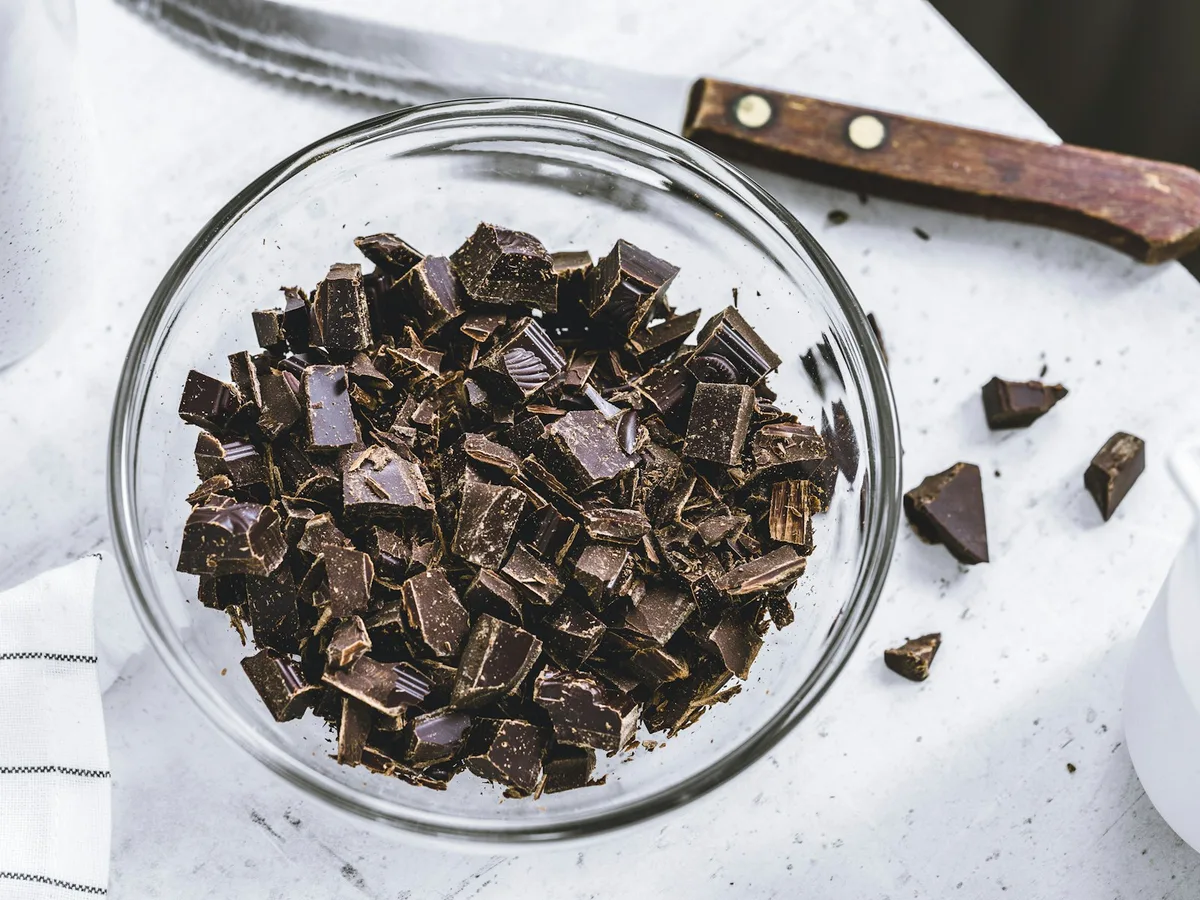
- Bars: the safe choice for mousse, ganache, truffles and hot chocolate. Chop them finely so they melt evenly.
- Chips: made to hold their shape in cookies, so many melt thick and grainy. Keep them for cookies.
- Callets: small discs of couverture chocolate, made for melting. Callebaut's 811 callets are 54.5%, very close to French pâtissier chocolate, and come in 2.5 kg bags online and at Costco Business Centre. Worth it if you bake a lot in December.
What about cocoa powder?
Cacao en poudre non sucré is unsweetened cocoa powder, sold in every Canadian baking aisle. Van Houten, the classic French tin, is Dutch-processed: treated to make it darker and less acidic. Camino, a Canadian fair-trade co-operative brand, sells a Dutch-processed cocoa if you want the same colour and flavour.
It matters in one case: Dutch-processed cocoa isn't acidic, so it won't activate baking soda. If a recipe uses baking soda and natural cocoa, don't swap.
Chocolat en poudre is something else: sweetened drinking chocolate, like Canadian hot chocolate mix. Don't bake with it.
Is French chocolate sold here?
Some is, in specialty shops and online, but you don't need it. A 55% baking bar or a good 70% bar does the same work. Spend the difference on butter: see the butter guide.
To try it out, make the gâteau au chocolat, then the thick hot chocolate when the weather turns.