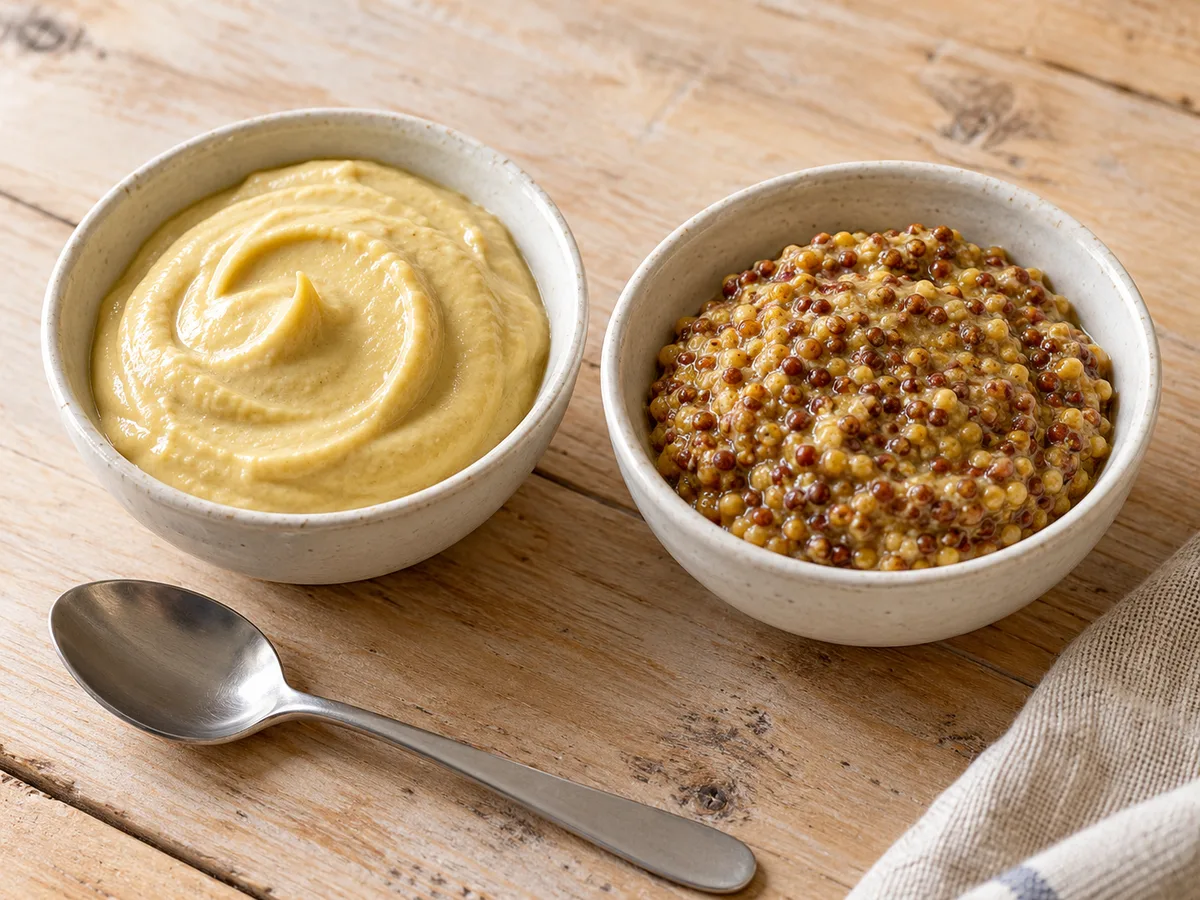
For moutarde de Dijon, buy a smooth Dijon mustard and taste it before you build a sauce on it. For moutarde à l'ancienne, buy whole-grain mustard, often labelled "old style" on Canadian jars.
Why taste a spoon first?
A supermarket jar of Dijon in France usually says "fine et forte": smooth, and strong enough to go up your nose. Canadian jars rarely say how strong they are, and the heat varies from brand to brand and with the age of the jar.
So taste half a teaspoon on its own. If it doesn't make your eyes water a little, I'd use a bit more than the French recipe says, especially in a vinaigrette or a mustard sauce.
Which Dijon jars will you find?
- French's Dijon, 325 mL: made with 100% Canadian mustard seed and white wine, and the easiest to find, at Walmart and on Sobeys' Voilà.
- Maille Dijon Originale, 200 mL and 500 mL: the jar most French cooks know from home, listed on Sobeys' Voilà. The Canadian label lists water, mustard seed, vinegar and salt.
- Grey Poupon Dijon, 500 mL, made with white wine, also on Voilà.
- Store brands: Great Value Dijon at Walmart, Compliments Organic Dijon (325 mL) at Sobeys stores. Fine for everyday vinaigrette; taste them for heat like any other jar.
In my fridge it's Maille, which isn't overly expensive here, or a supermarket Dijon when that's what the store has. Maille is the familiar French name, so it's the easy choice, but for a weeknight vinaigrette a store brand does the job.
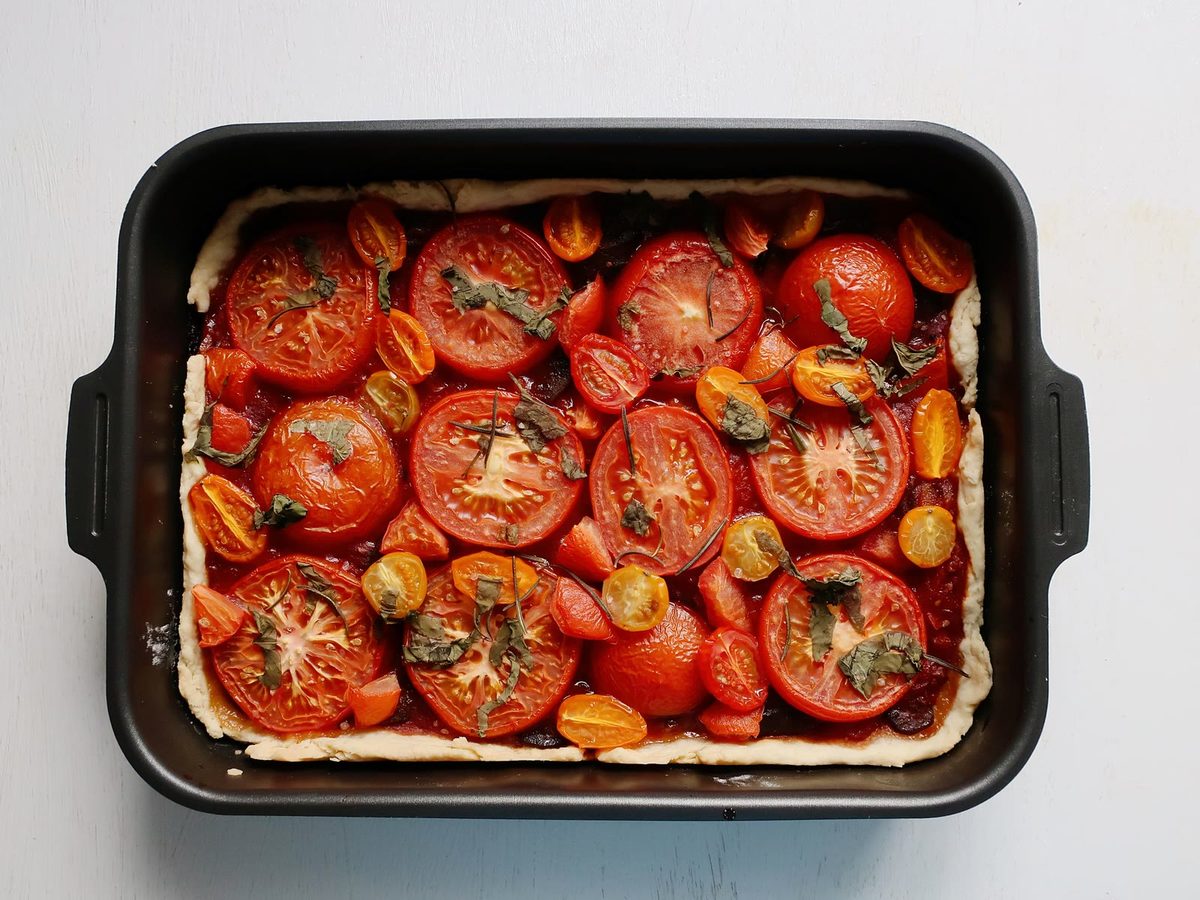
Where the mustard is the dish, like the thick layer on a weeknight tomato mustard tart, I use Maille. It sits closer to the strong Dijon of a French supermarket shelf, and in a dish built on mustard, that's where the jar matters.
Which jar is moutarde à l'ancienne?
À l'ancienne means whole-grain: the seeds are left partly whole, so it's milder, crunchy and a little sweet-sour. It isn't Dijon, even when a Canadian label calls it "grainy Dijon". Maille's version is sold here as "Old Style" in 500 mL jars and "Old Fashioned" in 200 mL jars.
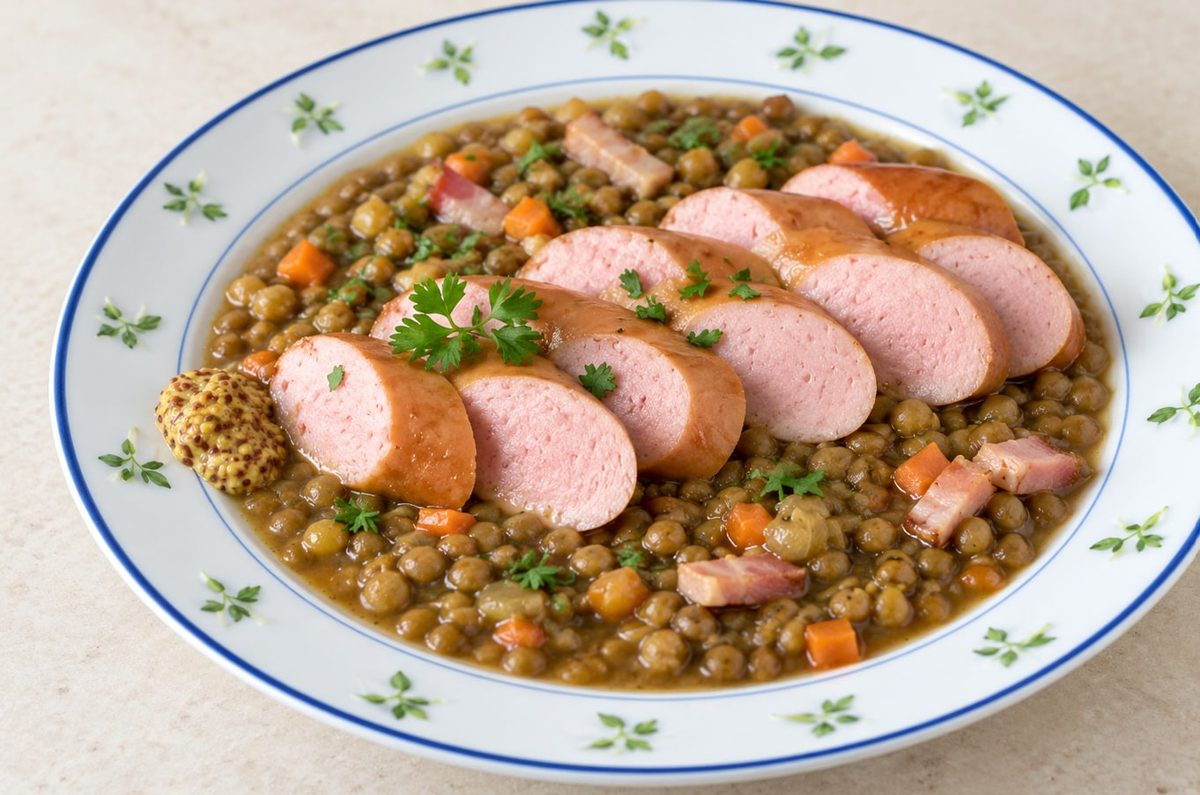
Moutarde de Meaux is the same style, from Meaux, east of Paris; any whole-grain mustard stands in for it. Serve it on the side of sausages and lentils or pot-au-feu, or stir a spoonful into a cream sauce at the end for texture.
Why not yellow mustard?
Yellow ballpark mustard is made from milder yellow seed, with lots of vinegar, and coloured with turmeric. In a vinaigrette it tastes sweet and flat, and it gives a sauce no heat at all. Keep it for hot dogs.
Is Dijon made in Canada real Dijon?
Yes. Moutarde de Dijon names a recipe, not a place: brown seed, ground fine and mixed with verjuice, wine or vinegar. It can be made anywhere. The one with a protected origin is moutarde de Bourgogne, made with Burgundy seed and Burgundy white wine.
And the seed is often Canadian. Much of the brown mustard seed French Dijon makers use is grown on the Canadian Prairies, mostly in Saskatchewan. When a poor Canadian crop cuts supply, French Dijon makers feel it on their shelves.
Smooth or whole-grain: which one goes where?
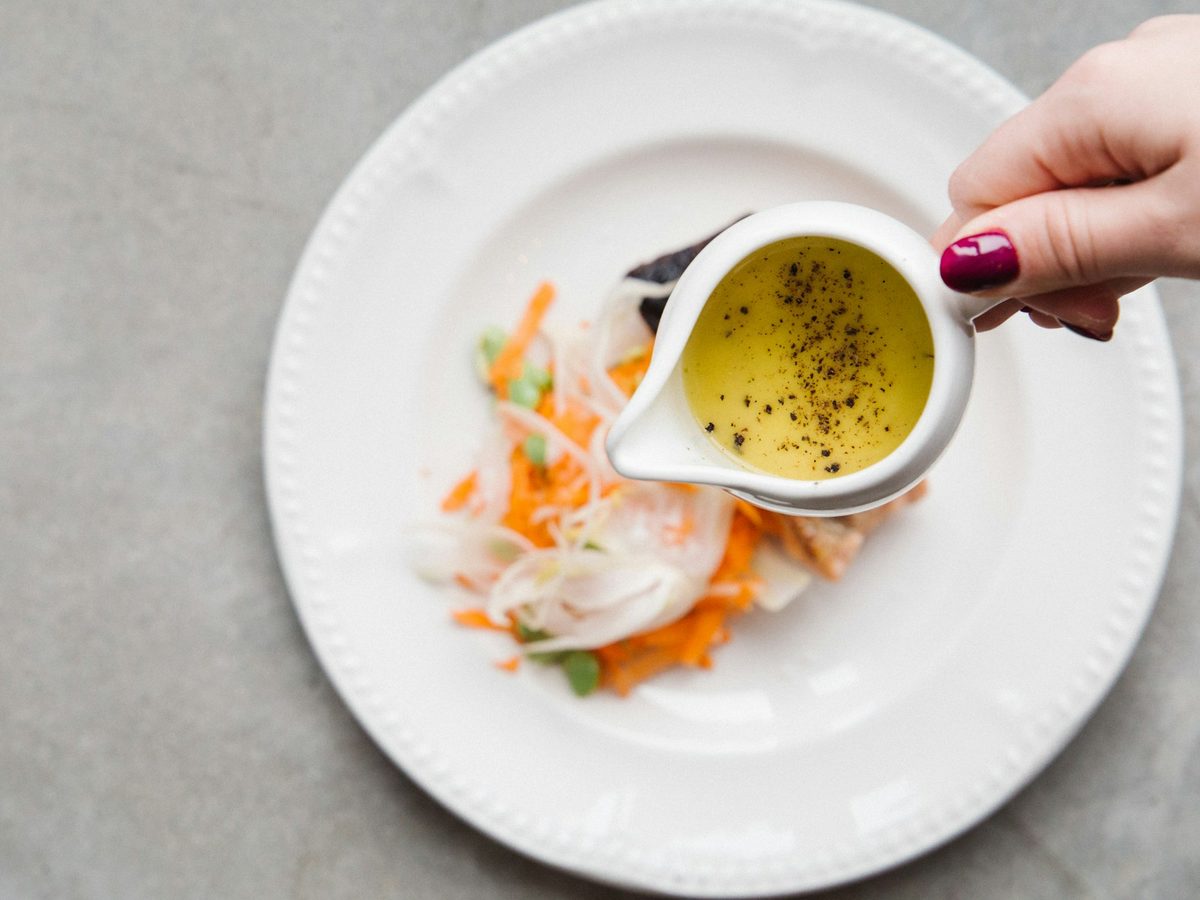
- Vinaigrette: smooth Dijon. It's what holds the oil and vinegar together; whole-grain doesn't emulsify as well.
- Rabbit or chicken in mustard sauce: smooth, strong Dijon, stirred in at the end.
- Tomato mustard tart: a thick layer of smooth Dijon on the pastry. The oven softens its heat, which is why a mild jar gives a flat tart.
- Sausages, lentils, pot-au-feu, cold meats: whole-grain on the side.
When does mustard go into a hot sauce?
At the very end, off the heat. Boiling takes the heat out of mustard and can make the sauce grainy, so take the pan off the burner, stir it in and serve. If the sauce has to wait, add a little more just before it goes to the table.
How much is "une cuillère"?
"Une cuillère à soupe" is a tablespoon, 15 mL, and "une cuillère à café" a teaspoon, 5 mL. When a recipe says only "une cuillère" of mustard, it nearly always means the tablespoon, and "une bonne cuillère" means heaped.
How long does an open jar keep?
Keep it in the fridge once opened. Dijon loses its heat over a few weeks, faster at room temperature, and an old jar tastes more of vinegar than mustard. If you only make vinaigrette now and then, buy the small jar.
To test a new jar, make the mustard vinaigrette: it's where a weak Dijon shows first.