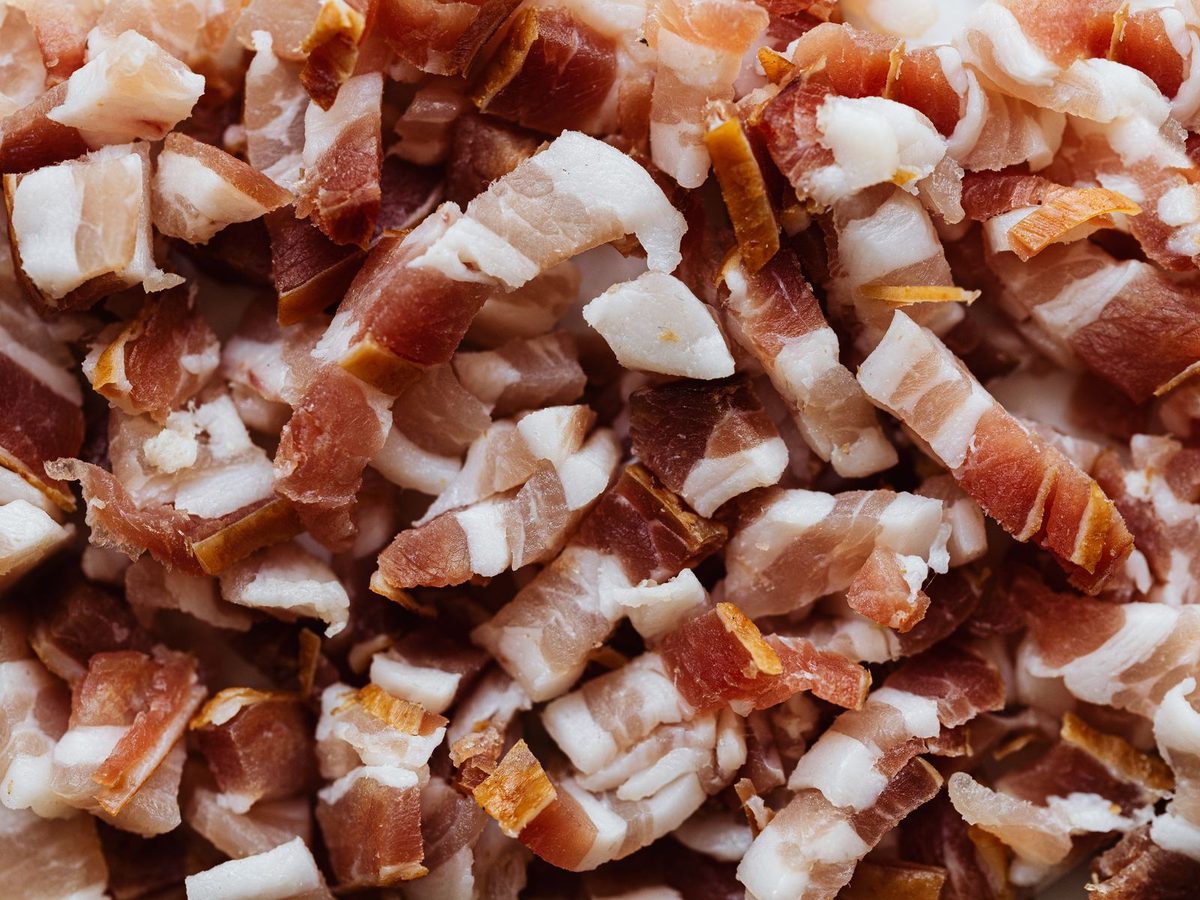
When a French recipe says lardons fumés, buy thick-cut smoked bacon and cut it crosswise into 1 cm strips, or buy a piece of slab bacon and cut real batons. For lardons nature, the unsmoked kind, use pancetta or salt pork.
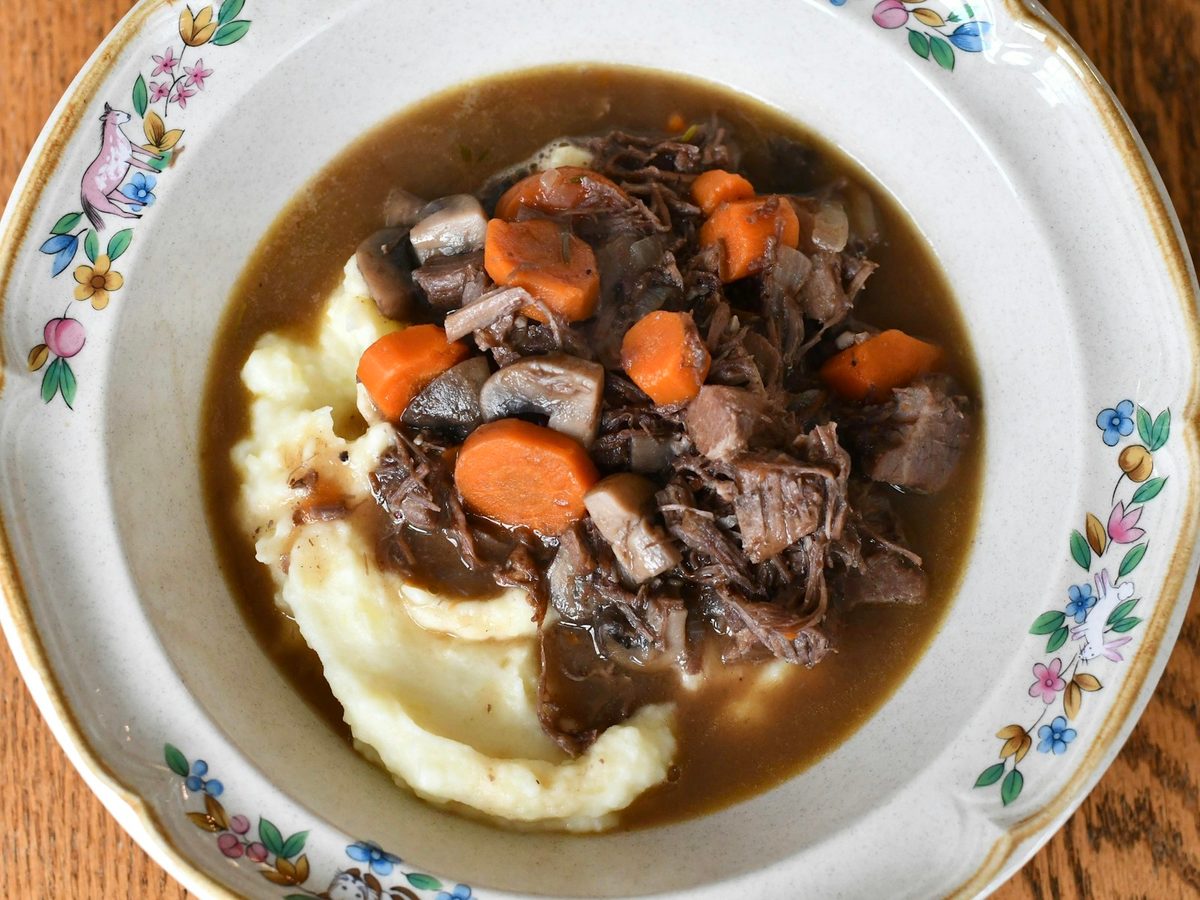
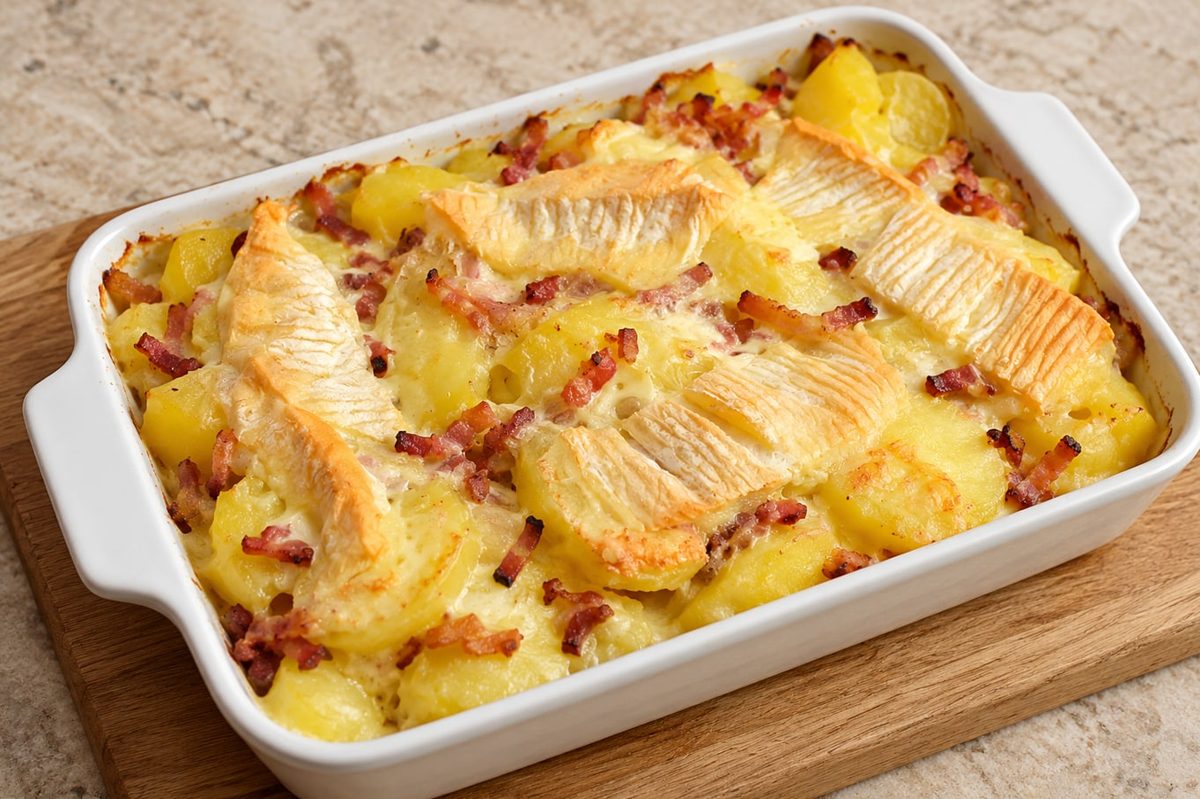
Lardons are small batons of cured pork belly, 5 mm to 1 cm thick, sold in little packs in every French supermarket. They go into quiche lorraine, bœuf bourguignon and tartiflette, and they stay meaty and a little chewy after cooking instead of turning into crisp shards.
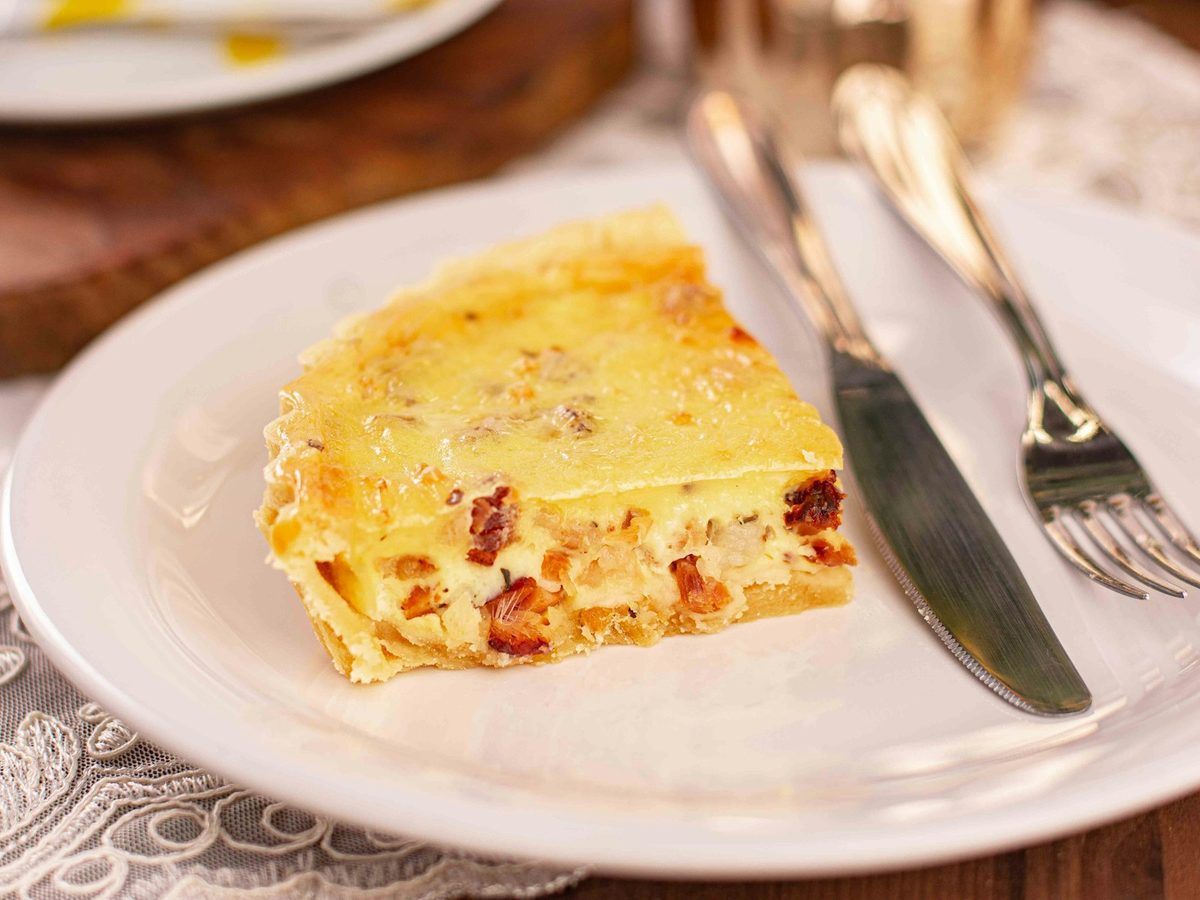
For my quiche Lorraine here, I just use bacon. A pack of smoked bacon is in every grocery store in the country, while packaged lardons are mostly a Quebec find, so bacon is what makes the quiche possible on any weeknight.
In a quiche the lardons sit in the custard, so their flat shape matters less than in a bourguignon, where you want chunky batons. What I watch is the flavour: plain smoked bacon is close to French poitrine fumée, and the sweet or heavily smoked packs are the ones to leave on the shelf.
Is bacon the same as lardons?
Almost. Canadian side bacon is the same cut, pork belly, cured and smoked like lardons fumés. The difference is the slicing: regular bacon is too thin and cooks into shards.
Thick-cut is the one to buy. Great Value Thick Sliced Naturally Smoked Bacon (Walmart) and President's Choice Dry-Cured Thick Cut Naturally Smoked Bacon (Loblaws and Real Canadian Superstore) both come in 375 g packs, and Compliments Thick Cut Naturally Smoked comes in a 1 kg pack at Voilà by Sobeys.
Stack four or five slices and cut them crosswise into 1 cm strips. They're flatter than a French lardon, so they brown faster: keep the pan at medium.
Four things to avoid:
- Maple, brown-sugar or honey bacon. The sweetness burns in the pan and ends up in your sauce.
- Bacon smoked over maplewood, like PC Old-Fashioned Style Extra-Thick Cut, or double-smoked bacon like Schneiders Double Smoked. Both taste stronger than French poitrine fumée; if that's all there is, blanch it first (below).
- Back bacon, peameal bacon or anything labelled Canadian bacon. Those come from the pork loin: lean, round and nothing like a lardon.
- Precooked bacon bits. They're dry and crunchy and won't render any fat.
Where to find real lardons
Packaged smoked lardons do exist here. Metro sells Plaisirs Gastronomiques smoked lardons (200 g) with the deli meats and Fumoir des cantons de l'Est lardons next to the bacon, and Voilà by Sobeys lists the same Plaisirs Gastronomiques pack.
The other route is slab bacon, a whole piece you cut yourself. Voilà lists Capital Fine Meats slab bacon by weight, and a butcher counter can cut you a piece if you ask. With a slab you choose the thickness, and an unopened piece keeps longer than sliced bacon.
Lardons nature: pancetta or salt pork
Pancetta is the closest to unsmoked lardons: Italian cured pork belly, usually not smoked. Flat pancetta (tesa) cuts into batons like lardons nature; rolled pancetta (arrotolata) gives round slices, often with pepper in the middle, so it's better diced.
Fantino & Mondello diced pancetta (125 g, at Voilà by Sobeys) is ready to use, but it's pre-cooked, so it renders less fat than raw lardons. Add a little butter to the pan before the onions.
Salt pork, lard salé in Quebec, is the other option, and the one for long braises. Metro and Maxi sell it, and Loblaws lists cured salt pork. It's much saltier than bacon: blanch it 2 to 3 minutes in boiling water, drain, and season the dish carefully.
How the French cook them
Lardons go into a cold or medium-hot pan with no fat and cook 6 to 8 minutes, until they're browned and most of the fat has melted out. That fat then browns the meat or softens the onions.
For delicate dishes, or a very smoky bacon, blanch the batons in boiling water for 2 to 3 minutes and drain before browning. Many French cookbooks do this for bœuf bourguignon, to soften the smoke and salt.
How much to buy
A French recipe calling for a pack of lardons usually means 150 to 200 g, about half a 375 g pack of thick-cut bacon. Extra batons freeze well: spread them on a tray, freeze, then bag them, and cook them straight from frozen.