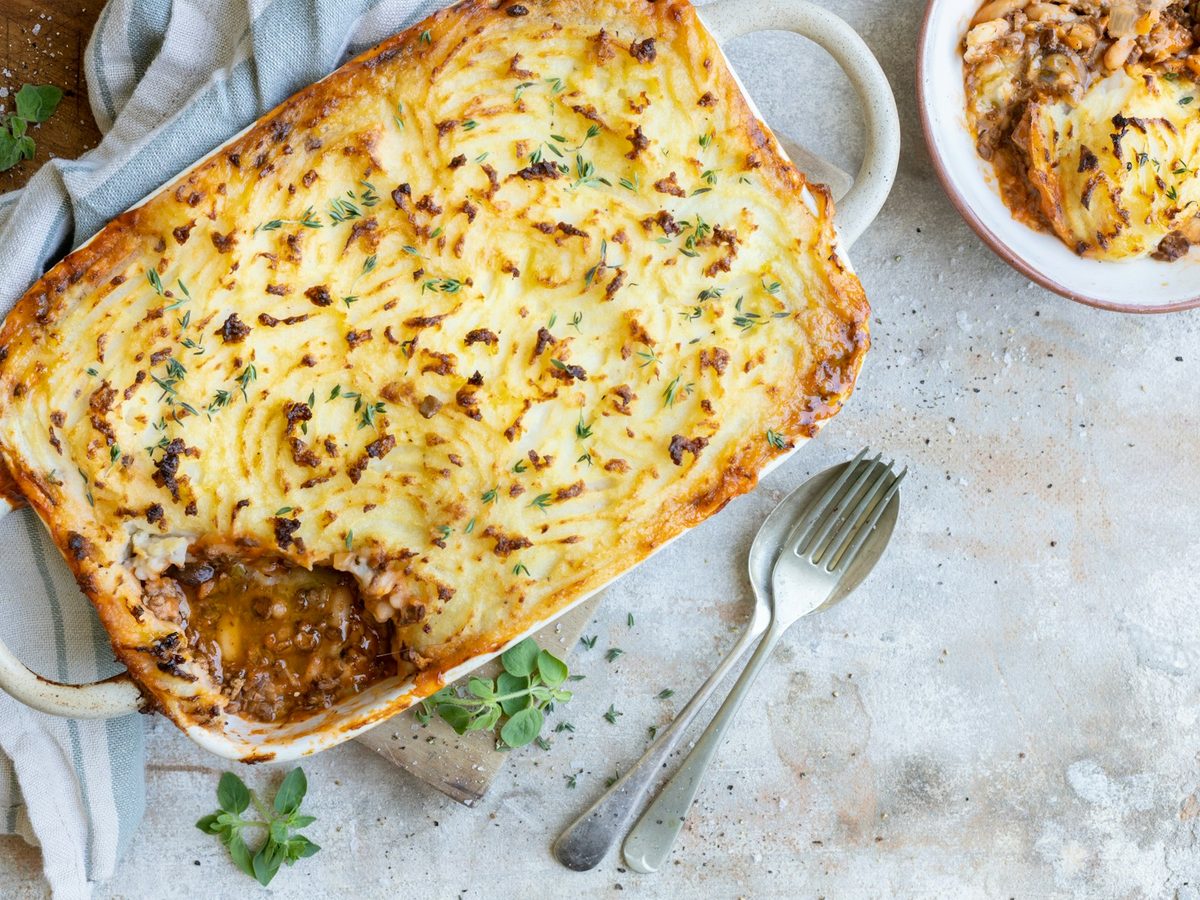
Seasoned ground beef under a thick layer of buttery mashed potato, baked until the top turns golden. The French cousin of shepherd's pie and pâté chinois, made with Yukon Golds and lean ground beef.
For me, hachis parmentier is a school-canteen memory more than a family dish: a golden potato top with the beef underneath, on a weekday lunch tray. Made at home it's a lot better, with real butter in the mash and a filling you season yourself.
Hachis parmentier is seasoned beef under a thick layer of buttery mashed potato, baked until the ridges on top turn golden. It's French weeknight food, made in one dish and served straight from it.
In Canada, the potatoes are what taste a little different. Yukon Golds make a denser, creamier mash than the floury Bintje used in France, and they take less milk, so add it slowly and stop when the mash holds a ridge.
How is it different from shepherd's pie?
In Canada it sits between shepherd's pie and Quebec's pâté chinois, and everyone at the table recognizes it. On the plate, though, there's no gravy, no peas and no cheddar crust, and unlike pâté chinois there's no layer of corn. The beef is moist, not saucy, and the mash is richer, with butter, milk and a pinch of nutmeg.
Making it in Canada
The 2 French ingredients, and what to buy for them in Canada.
Pommes de terre à purée (Bintje)→Yukon Gold potatoes
French purée potatoes such as Bintje are floury and buttery-tasting. Yukon Golds are a little waxier: they mash smooth without going gluey but absorb less milk. For a fluffier mash closer to Bintje, use half russets; on their own, russets taste blander.
Bœuf haché 15 %→Lean ground beef
French recipes use ground beef at 15% fat. On a Canadian label, lean ground beef has at most 17% fat, the closest match. Extra lean (at most 10%) makes a dry, crumbly filling, and medium leaves a layer of fat under the mash.
Good to know: Buy Yukon Golds of a similar size, so the chunks finish boiling at the same time and the mash has no hard lumps.
Ready to cook?
Hachis Parmentier
Seasoned ground beef under a thick layer of buttery mashed potato, baked until the top turns golden. The French cousin of shepherd's pie and pâté chinois, made with Yukon Golds and lean ground beef.
Prep time
30 min
Cook time
55 min
Resting time
5 min
Total time
1 hr 30 min
Servings
6
Let it settle so the beef layer doesn't run when you serve it.
Ingredients
Original recipe: 6 servings.
Instructions
Boil the potatoes. Put the potatoes in a pot of cold salted water, bring to a boil and simmer 18–20 minutes, until a knife slides in easily. Drain well and let them steam dry in the pot for 2 minutes.
Mash. Mash the potatoes by hand or with a ricer, never in a food processor (it makes them gluey and the top won't brown), with 60 g butter, then beat in the warm milk a little at a time until smooth and soft but still thick enough to hold a ridge. Stop adding milk once it does. Season with salt, pepper and nutmeg.
Cook the filling. Heat the oven to 200°C (400°F). Heat the oil in a large frying pan over medium heat and soften the onion for 5 minutes. Add the garlic, then the beef, breaking it up, and cook 6–8 minutes until browned with no pink left. Health Canada's safe minimum for ground beef is 71°C (160°F).
Simmer. Stir in the tomato paste, broth and thyme. Simmer 5 minutes, until the liquid has mostly reduced but the meat is still moist. Add the parsley and season well. If the meat looks dry, add a few more spoons of broth: the potato soaks some up in the oven.
Assemble. Spread the beef in a 23 × 33 cm (9 × 13 in) baking dish. Spoon the mash over it, spread it to the edges to seal, and drag a fork across the top to make ridges. Dot with the remaining butter and sprinkle with cheese if using.
Bake. Bake 25–30 minutes, until the ridges are golden and the filling bubbles at the edges. Rest 5 minutes before serving.
Notes
To make it ahead, assemble it the day before and bake it straight from the fridge, adding 10–15 minutes.
Freeze it unbaked, well wrapped, for up to 2 months; thaw overnight in the fridge before baking.
Leftovers keep 3 days in the fridge. Reheat them covered until steaming in the middle. Health Canada's safe minimum for reheated leftovers is 74°C (165°F).