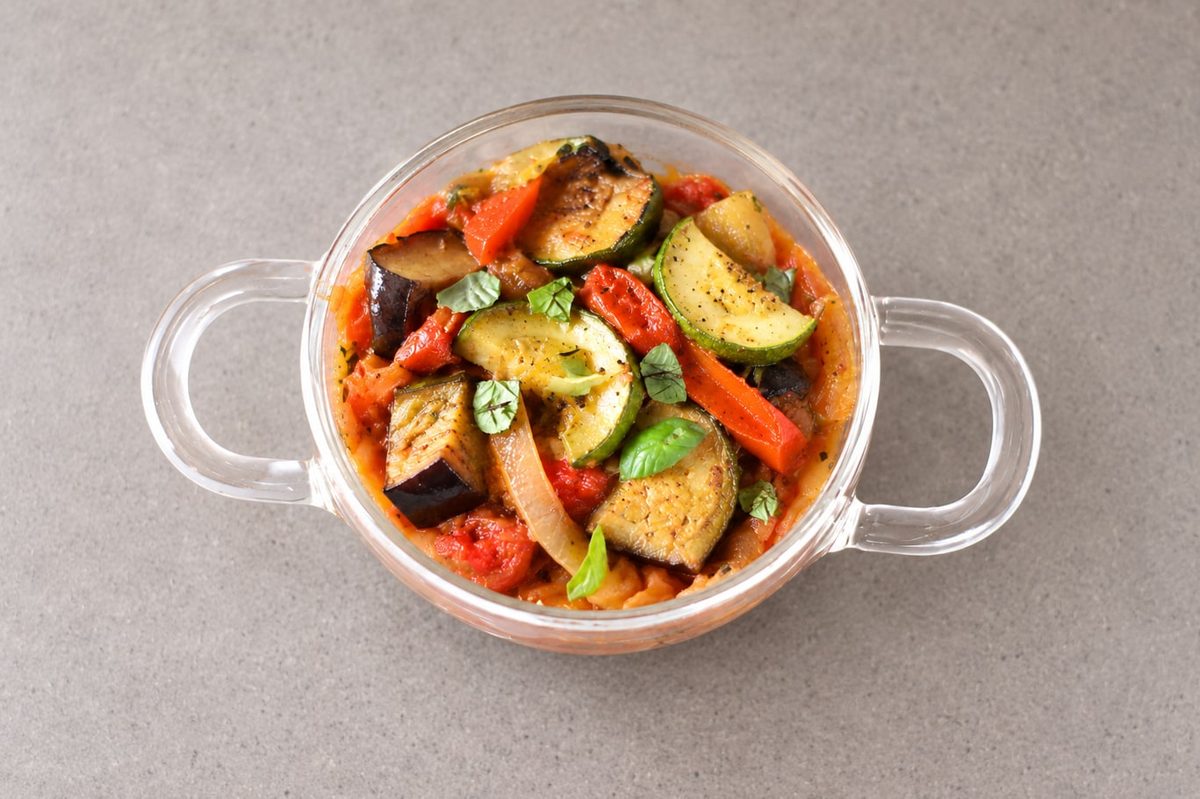
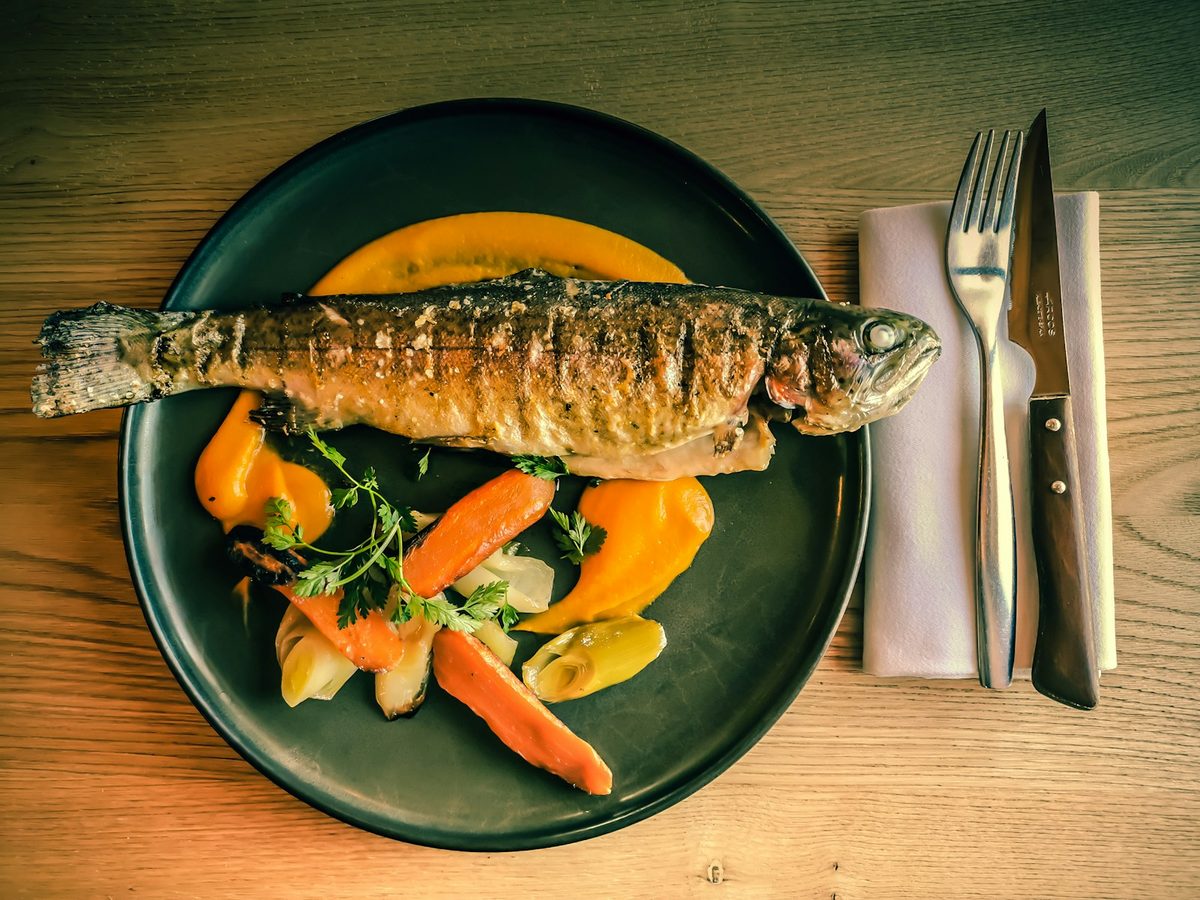
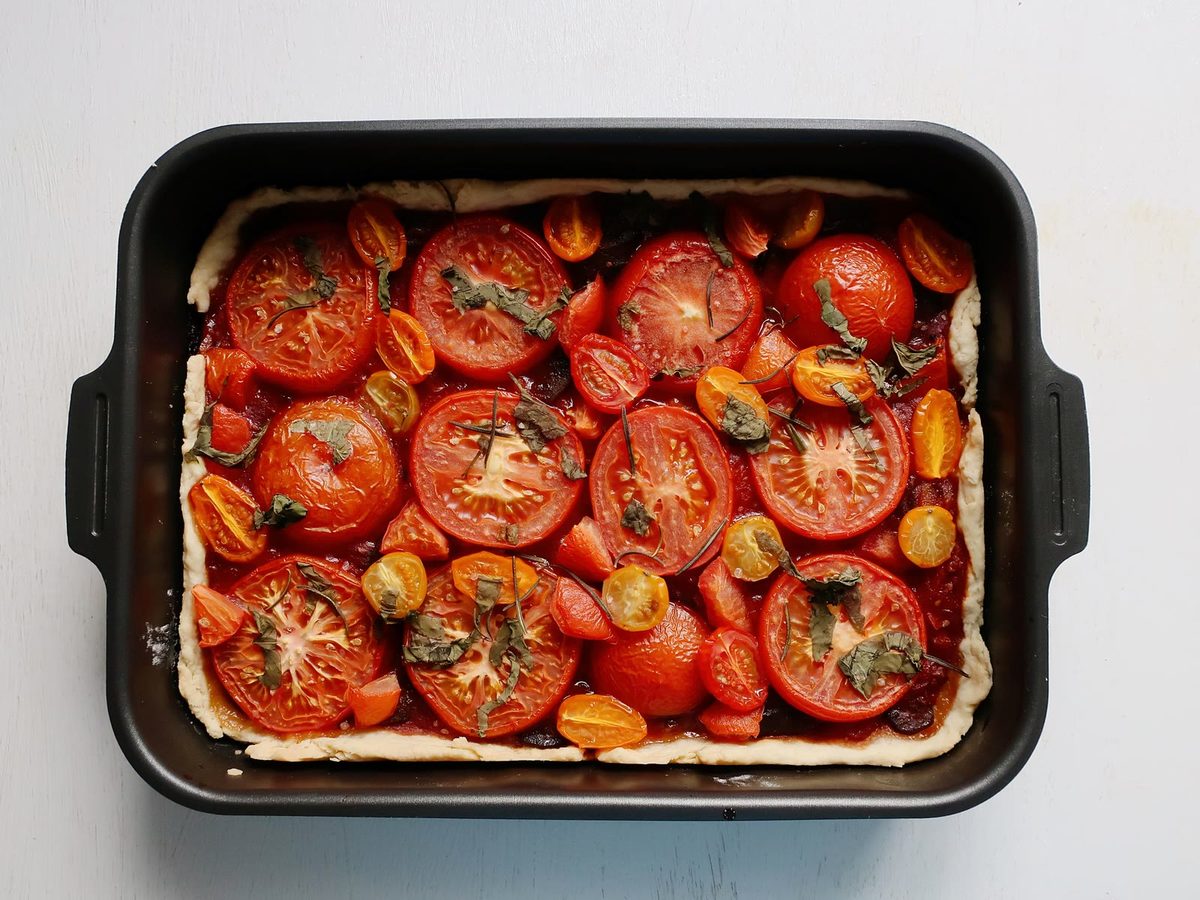
Eggplant, zucchini, peppers and tomatoes, each browned in olive oil, then simmered slowly with garlic, thyme and bay. The summer vegetable stew of Nice, served as a side to grilled meat or fish, at its best with August field vegetables.
For me, ratatouille is a side more than a full dish. I put it next to grilled chicken, lamb chops, a piece of fish or sausages, and it does the job of both the vegetables and the sauce. Some people eat a big bowl of it with bread as a meal, and that's fine too, but that's not how I serve it.
The Canadian surprise is the size of the vegetables. Supermarket eggplant and zucchini here are often much bigger and wetter than the ones from a Provence market, so I salt the eggplant and give the zucchini room in the pan. And I skip the jars of herbes de Provence: many blends sold here contain lavender, which I don't want in a long simmer.
Ratatouille is what the south of France eats all summer: eggplant, zucchini, peppers and tomatoes cooked slowly in olive oil until soft, then eaten hot, warm or cold. It comes from Nice. In Canada I'd make it in August and September, when the same vegetables come in from Ontario and Quebec fields.
Big, wet vegetables, and what to do about them
Out of season especially, those big vegetables are full of water, and water is what ruins a ratatouille: it turns it into grey vegetables sitting in a pool of juice. So here the eggplant gets salted and patted dry, and the zucchini goes into the pan in a single layer.
Why each vegetable goes in the pan on its own
It takes longer, but each vegetable browns instead of steaming in the others' water. Done right, the eggplant is creamy, the zucchini still holds its shape, and nothing is floating at the bottom of the pot.
Making it in Canada
The 3 French ingredients, and what to buy for them in Canada.
Aubergines→Globe eggplant, salted; or 2–3 Italian eggplants
The globe eggplant in every produce section is usually bigger and seedier than the ones on a Provence market stall, and it soaks up oil. Salt the cubes for 20 minutes and pat them dry, and they brown instead of steaming. Smaller Italian eggplants have fewer seeds, so salting is optional. Long Asian eggplants go very soft in a 40-minute simmer: if that's all you have, add them for the last 15 minutes only.
🛒 Pick a firm, glossy eggplant that feels heavy for its size; a soft or wrinkled one is old and bitter. Italian eggplants, if you see them, are smaller and darker.
Tomates mûres de saison→Field tomatoes in August and September; a 796 mL can of whole tomatoes the rest of the year
Late-summer field tomatoes are as good as any in Provence. From October to June, canned whole tomatoes beat pale winter tomatoes, which make a watery stew. Many cans contain calcium chloride, which keeps the tomatoes firm: crush them well by hand and give the sauce the full 15 minutes.
🛒 Aylmer Whole Tomatoes, 796 mL, is listed at Voilà (Sobeys), and Aylmer also makes a no-salt-added version. Any 796 mL can of whole tomatoes works: check the label and pick one without added herbs or garlic.
Herbes de Provence→Fresh thyme and a bay leaf
Jars of herbes de Provence are sold here, but many North American blends include lavender, which tastes soapy after a long simmer and isn't in a Niçois ratatouille. Fresh thyme and bay give the clean taste. If you use a jar, use 1 teaspoon and read the label first.
Good to know: Late summer is the time to make it: Canadian field eggplant, zucchini, peppers and tomatoes all come in together in August and September.
Ready to cook?
Ratatouille
Eggplant, zucchini, peppers and tomatoes, each browned in olive oil, then simmered slowly with garlic, thyme and bay. The summer vegetable stew of Nice, served as a side to grilled meat or fish, at its best with August field vegetables.
Prep time
40 min
Cook time
1 hr 20 min
Total time
2 hr
Servings
6
Ingredients
Original recipe: 6 servings.
Instructions
Salt the eggplant. Toss the eggplant cubes with 1 tsp salt in a colander and leave them 20 minutes while you cut the other vegetables. Pat dry with a clean towel. Salting is optional with Italian eggplants.
Brown the eggplant. Heat 1½ tbsp oil in a large Dutch oven or a 28 cm frying pan over medium-high heat. Brown half the eggplant 6–8 minutes, stirring often, until golden and soft. Move to a bowl, then repeat with another 1½ tbsp oil and the rest. Don't salt it again.
Brown the zucchini. Add 1 tbsp oil and the zucchini in a single layer, with a pinch of salt. Cook 5–6 minutes until lightly browned but still firm. If it doesn't fit flat, do two batches: piled up, it steams and gives off water. Add to the bowl.
Soften the peppers and onion. Add 1 tbsp oil, the peppers and onion. Cook 10 minutes over medium heat, until soft and sweet. Add the garlic for 1 minute.
Add the tomatoes. Add the tomatoes, thyme and bay leaf and simmer 10 minutes with fresh tomatoes, 15 with canned, until they break down into a sauce.
Simmer together. Return the eggplant and zucchini to the pot and stir gently. Simmer over low heat, partly covered, for 30–40 minutes, stirring now and then, until everything is very soft but still holds its shape. If you used long Asian eggplants, add them for the last 15 minutes only.
Finish. Remove the thyme stems and bay leaf. Stir in the last tablespoon of olive oil and the basil, and season with salt and pepper. Serve hot, warm or at room temperature, next to grilled meat or fish.
Notes
Keeps 5 days in the fridge and freezes for 3 months; the eggplant is softer after thawing.
Big winter zucchini are often seedy. Quarter them lengthwise and cut away the spongy core before cubing: that's the part that waters.
Liquid in the pot at the end? Tip the pot, spoon the juices into a small pan, boil them down for a few minutes and stir them back in.
Some cooks grate a little Parmesan over the top to serve. It isn't traditional in Nice, but it's good.
Course: Mains · Cuisine: French · Adapted for Canadian kitchens
Made this? Send it to whoever you're cooking for next, or pin it for later.