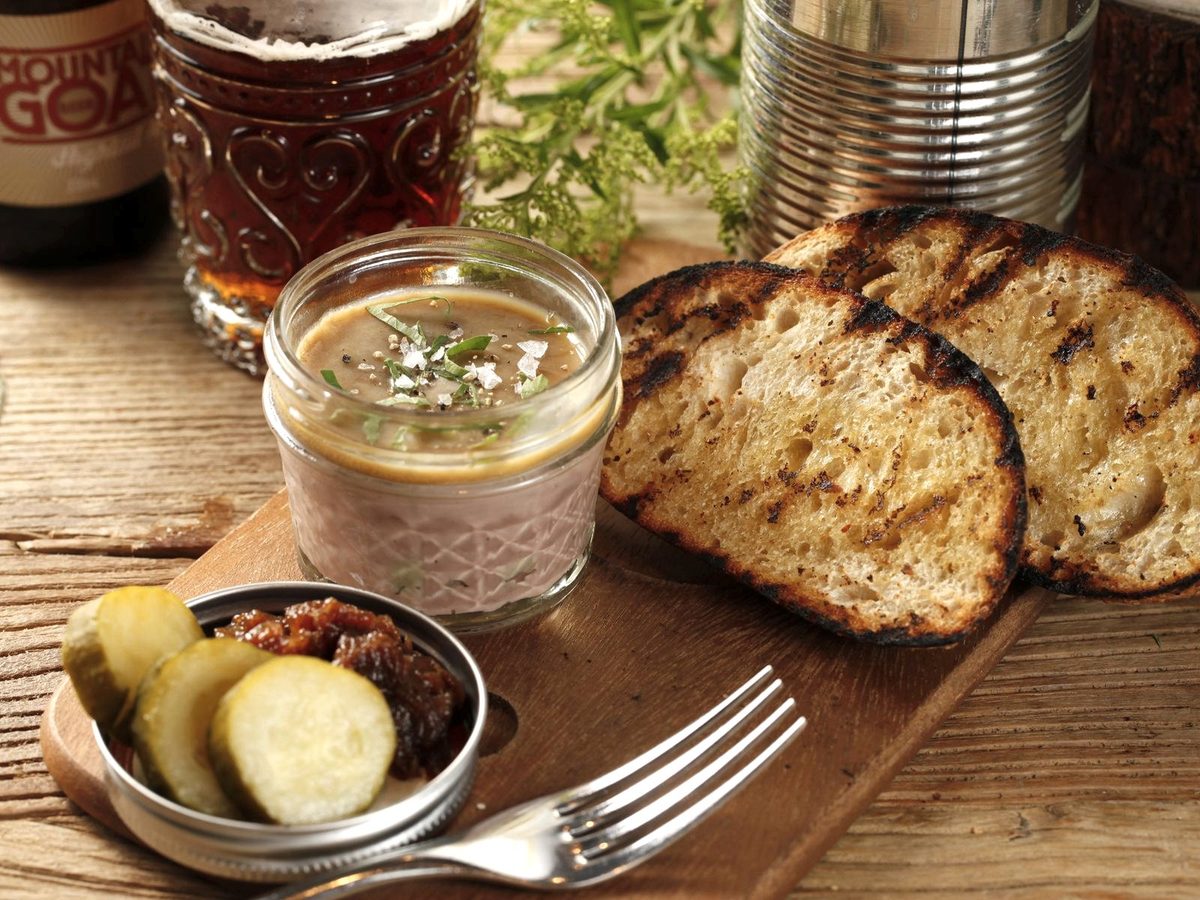
Pork shoulder and belly cooked four to five hours in lard, shredded and packed into jars under a layer of fat. Spread on crusty bread with cornichons, it's the classic French apéritif, made here with supermarket pork and a block of pure lard.
I grew up with rillettes at apéro: a jar on the table, a baguette, cornichons, and everyone spreading their own. Tours, Le Mans, pork, duck, I like them all, as long as there's good bread next to them.
In France you'd pick up a tub from any supermarket deli fridge; in Canada you'll rarely see them, so making your own is the way to get that apéro here. It turns out the Canadian side is easy: shoulder and belly are in every meat counter, and the one thing to watch is the word lard, which here means the pure white rendered fat, not bacon. It takes an afternoon of waiting, and the jars keep for two weeks.
Rillettes are pork cooked so slowly in fat that it falls into threads, then packed into jars and spread on bread.
How are rillettes different from pâté?
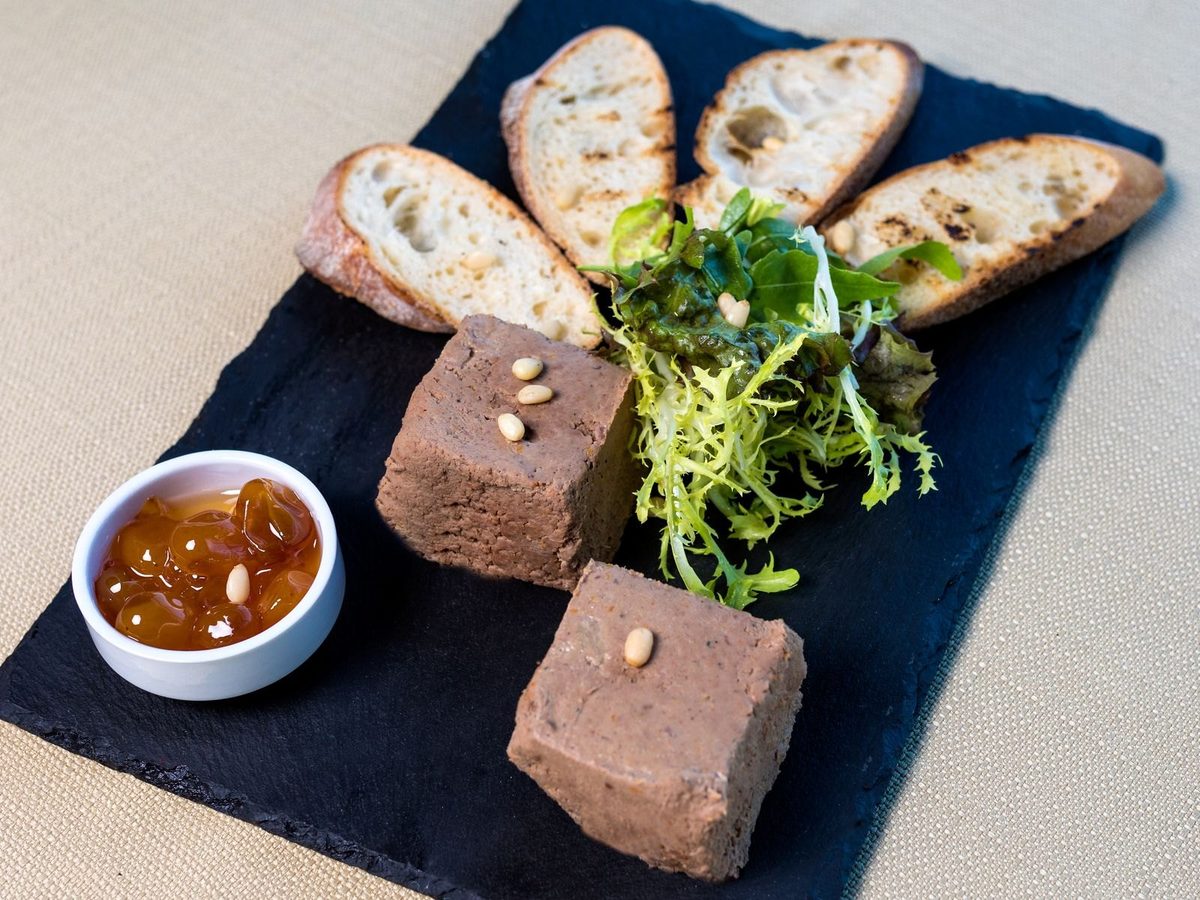
Pâté is ground, bound and baked. Rillettes are cubes of shoulder and belly simmered in lard with salt, pepper and herbs until they fall apart, then pulled with forks and sealed under fat. The texture is soft and stringy, not smooth.
Can you bring a jar back from France?
Usually not. Canada restricts cooked pork products from Europe in your luggage: only commercially sterile, sealed cans are generally allowed, so a jar from the charcuterie counter won't make it. Check the CFIA's current traveller rules before you pack anything.
The one way to get it wrong
Heat. If the fat bubbles and the meat fries, the rillettes go dry and hard, and no amount of fat stirred in afterwards brings them back; only the cooking juices help a little.
Making it in Canada
The 3 French ingredients, and what to buy for them in Canada.
Échine et poitrine de porc→Boneless pork shoulder (butt) and pork belly
Échine is the shoulder butt. With the belly you get about two parts lean to one part fat, which is what makes soft threads. Lean cuts such as loin turn dry and woolly.
🛒 Look for 'pork shoulder', 'pork butt' or 'shoulder blade roast', boneless. Belly is often sold with the rind on: see the shopping note.
Saindoux→Pure lard, the white 454 g block
Watch the false friend: in French, lard means bacon or fatback. What you want is rendered pork fat, which Canadian labels call pure lard. It's neutral and sets firm, so it seals the jars. Don't use shortening: it tastes of nothing and sets waxy.
🛒 Tenderflake Pure Lard, 454 g, is listed at Metro and Super C in Quebec and at Walmart nationally; Voilà (Sobeys) lists the 1.36 kg size. One 454 g block covers the cooking and the seal.
Quatre-épices→Ground allspice, or a quick homemade mix
For ¼ tsp, ground allspice is fine: rounder and a little sweeter than the French blend. To mix your own, combine 1 tsp ground white pepper, ½ tsp nutmeg, ½ tsp ground ginger and ¼ tsp ground cloves, and keep the rest in a jar for a terrine.
Good to know: Pork belly here often comes with the rind on. Slice it off with a sharp knife before cubing, keeping as much fat on the meat as you can.
Ready to cook?
Pork Rillettes
Rillettes de porc
Pork shoulder and belly cooked four to five hours in lard, shredded and packed into jars under a layer of fat. Spread on crusty bread with cornichons, it's the classic French apéritif, made here with supermarket pork and a block of pure lard.
Prep time
30 min
Cook time
5 hr
Resting time
12 hr
Total time
17 hr 30 min
Servings
12
Chill at least 12 hours, ideally 2 days, so the flavour settles and the fat sets.
Ingredients
Original recipe: 12 servings.
Instructions
Melt the lard. Melt the 250 g of lard in a heavy Dutch oven over low heat.
Add everything. Add the pork, salt, pepper, spice, bay, thyme, garlic and water or wine. Stir and bring to a very gentle simmer.
Cook slowly. Cover and cook over the lowest heat, or in a 140°C (275°F) oven, for 4–5 hours, stirring every hour, until the meat falls apart when pressed with a spoon. The fat should barely move.
Drain. Remove the herbs and garlic. Lift the meat out with a slotted spoon into a bowl, and keep the fat and juices.
Shred. While the meat is warm, shred it with two forks into long threads, not a paste. Stir in enough of the cooking fat and juices to make it moist and spreadable. Taste: it should be well seasoned, since cold dulls salt.
Pack and seal. Pack into clean jars, pressing down to remove air. Let cool, then pour over a 5 mm layer of melted lard to seal. Refrigerate at least 12 hours before eating.
Equipment
Staub 5.5 L round cocotte: A heavy cocotte holds the very low, steady heat that rillettes need for five hours.
Amazon links are affiliate links: as an Amazon Associate I earn from qualifying purchases, at no extra cost to you.
Notes
Sealed with fat, rillettes keep 2 weeks in the fridge. Once opened, eat within 5 days.
Freeze in small jars for up to 3 months.
Serve at room temperature: take the jar out 30 minutes before.
Dry rillettes mean the heat was too high. Warm them gently and work in more of the cooking juices, not more fat.
Course: Appetizers · Cuisine: French · Adapted for Canadian kitchens
Made this? Send it to whoever you're cooking for next, or pin it for later.