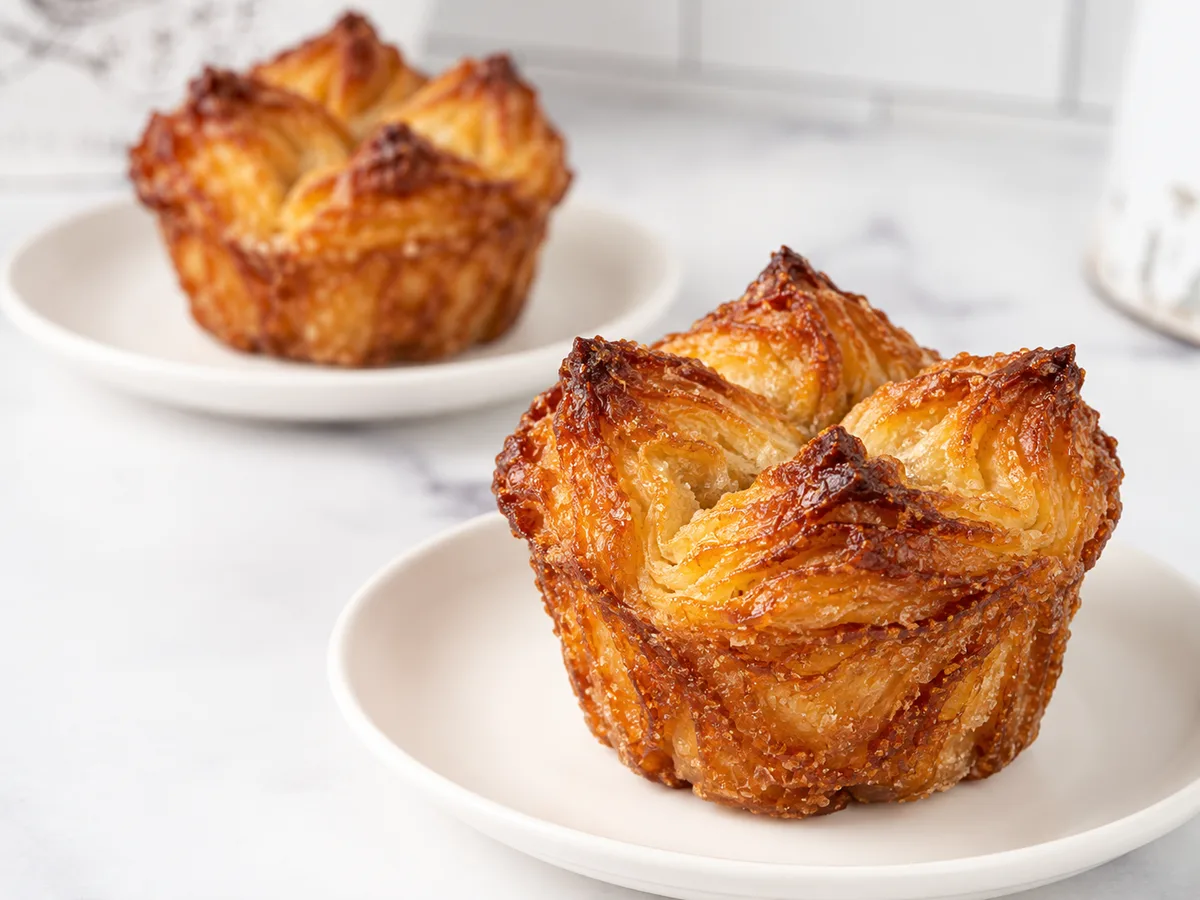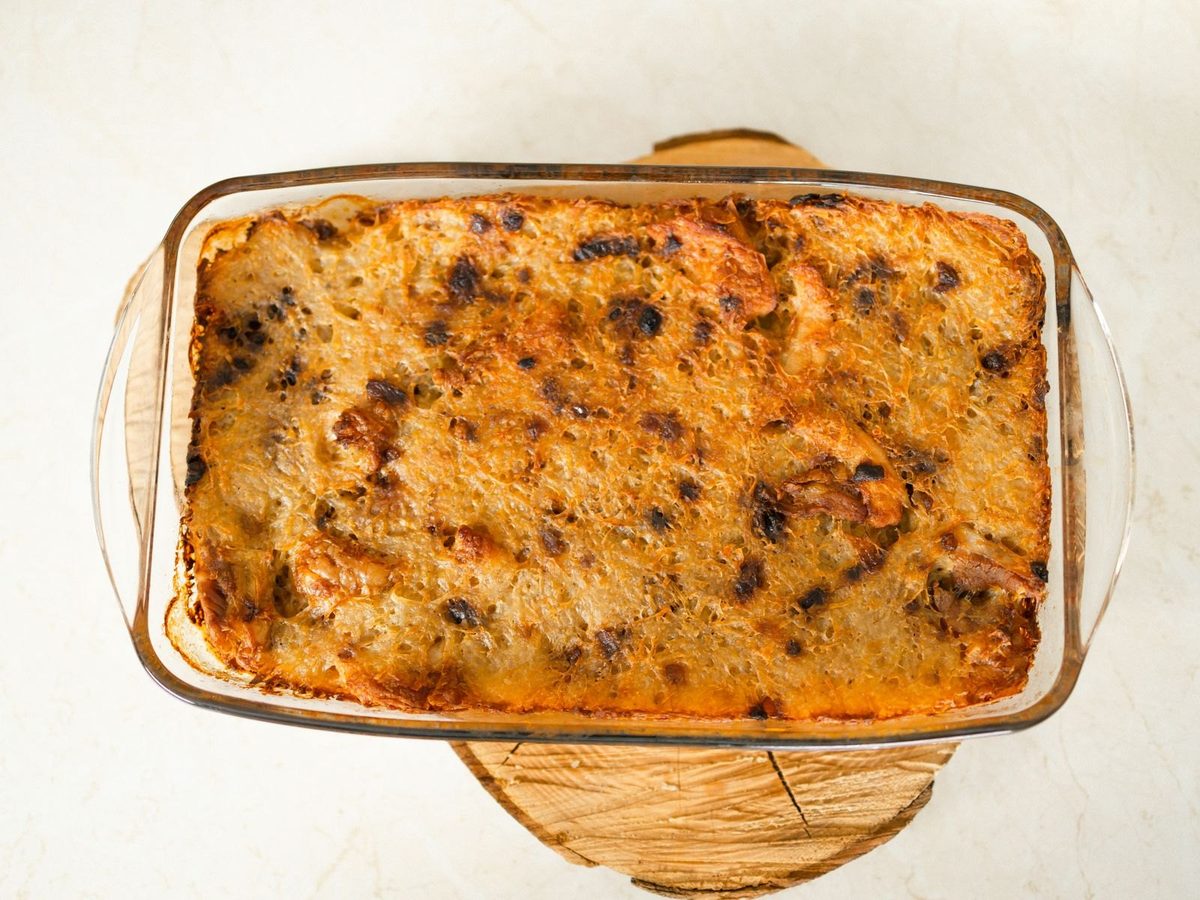
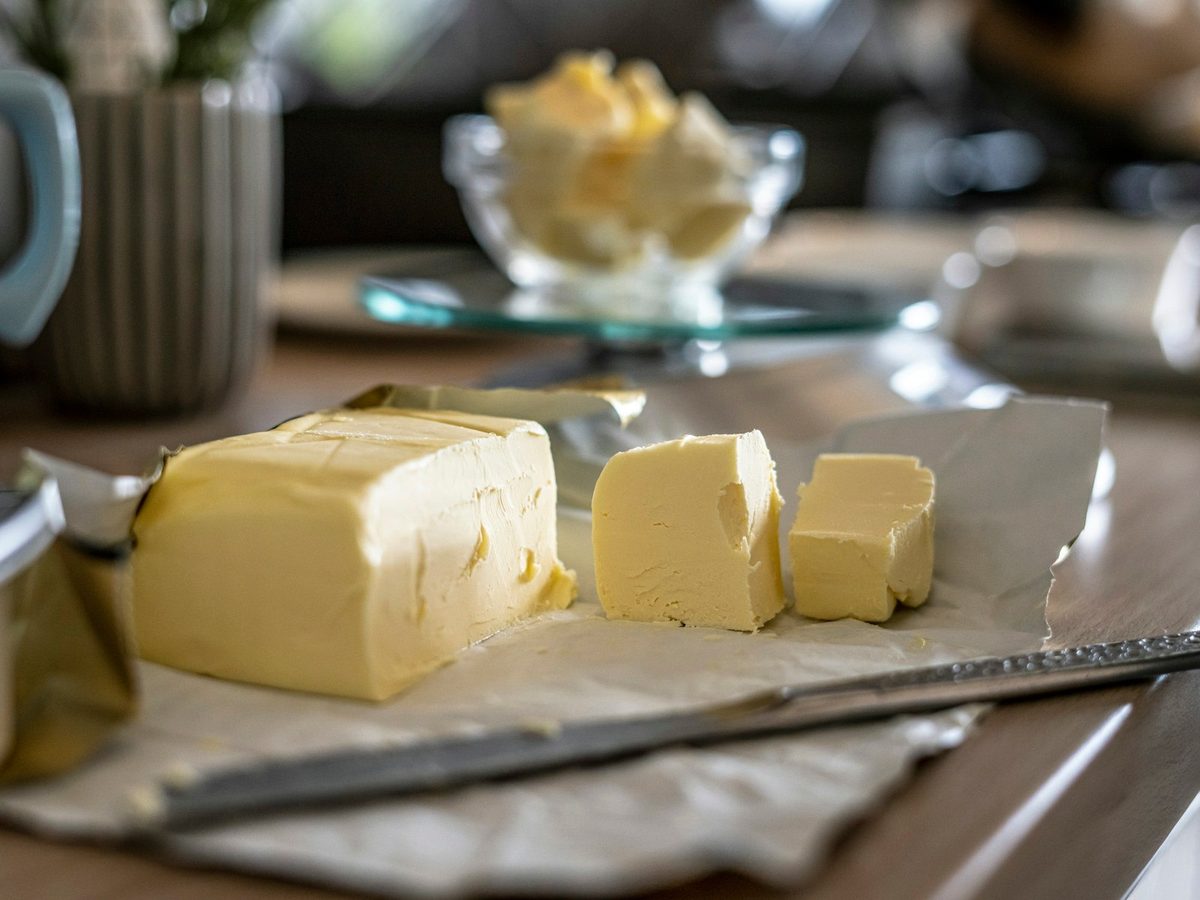
For cakes, tarts, cookies and most cooking, regular Canadian unsalted butter works perfectly. Buy an 82% European-style butter only where butter is the structure of the dish: croissants, kouign-amann and puff pastry.
For kouign-amann and croissants, my pick is Lactantia European Style 82% where you find it. When the store doesn't have it, regular unsalted butter does the job, as long as you give the dough longer in the fridge between folds.
European-style butter costs more here and isn't on every shelf, so I keep it for the pastries where you really taste the butter. Regular Canadian butter is made from sweet cream, so it's milder than the cultured butter common in France. In a cake or a sauce that hardly shows, but in a kouign-amann, where butter and sugar are most of the flavour, the cultured 82% tastes closer to home.
Why 80% and 82% butter behave differently
Canadian rules require butter to contain at least 80% milk fat. French butter must contain at least 82%, and much of it is cultured, so it tastes faintly tangy. The rest is mostly water, so Canadian butter carries a couple of points more of it.
That water shows when cold butter is folded into dough. At 80%, a cold slab is less pliable: it cracks between the layers instead of spreading, and the extra water steams out unevenly in the oven. In a cake, you won't notice the difference.
Which recipes need the 82%?
- Croissants, kouign-amann and homemade puff pastry: the 82% gives cleaner, flakier layers.
- Beurre blanc and sauces finished with butter: regular unsalted works if the sauce never simmers; 82% just tastes richer in a sauce that's mostly butter.
- Butter on bread, where you taste it on its own: cultured European-style butter is closer to what you'd spread in France.
- Cakes, tarts, cookies, brioche and everyday cooking: regular Canadian butter. Don't pay for 82% butter for a cake: you won't taste it.
Where to find European-style butter
Look first for Lactantia European Style: unsalted at 82% and salted at 81%, made from cultured cream, in 250 g blocks. Sobeys lists both, but they aren't in every store and availability varies by province. Whatever your store has, read the wrapper: anything marked 82% M.F. or more does the same job, Canadian or imported.
No 82% at your store?
Use regular unsalted butter for croissants and laminated doughs. West of Ontario, this is the main answer rather than the fallback, because European-style butter is hard to find. Give the dough an extra 15 to 30 minutes in the fridge between folds. Before each fold, press the butter slab with a finger: it should bend without snapping, and feel about as firm as the dough. Work in a cool kitchen, and if butter starts to show through the dough, stop and chill it.
Weighing butter: 250 g plaquettes, 454 g blocks
French recipes count butter in grams, and the standard French plaquette is 250 g, with a 125 g small one. Canadian butter comes in 454 g (1 lb) blocks, so half a block is 227 g, which is 23 g short of a plaquette. Weigh it, especially for a cake or a pastry where the butter is a quarter of the dough.
Lactantia and Gay Lea both sell 454 g blocks, and Lactantia's European Style comes in 250 g, the French size. Without a scale, one tablespoon of butter weighs about 14 g.
Salted, unsalted and demi-sel
Most French recipes mean unsalted butter unless they say demi-sel. In Brittany, though, salted is the everyday butter, and Breton recipes like far breton and kouign-amann are built on it.
Under French rules, beurre demi-sel has 0.5 to 3% salt, and above 3% it's beurre salé. The wrapper doesn't give a salt percentage, but the Nutrition Facts table gives sodium per serving: sodium × 2.5 is the salt. Divide by the serving weight and you can compare it with demi-sel's 0.5 to 3%. If it's mild, add a pinch of flaky sea salt to a Breton recipe.
Going the other way, salted butter in a French cake that asks for unsalted works if you leave out the recipe's pinch of salt. For a custard or a butter sauce, stick to unsalted, where you control the seasoning.
Brown butter and clarified butter
Beurre noisette for madeleines and financiers works fine with regular 80% butter. It foams and spits a little longer, because there's more water to boil off, and you end up with slightly less: about 80 g of brown butter from 100 g.
Clarified butter (beurre clarifié) loses both the water and the milk solids, so 250 g of Canadian butter gives about 200 g. Melt it slowly, skim the foam, and pour off the clear fat, leaving the milky layer at the bottom. It keeps for weeks in the fridge and takes a hotter pan than whole butter, so it's the one to sear in.