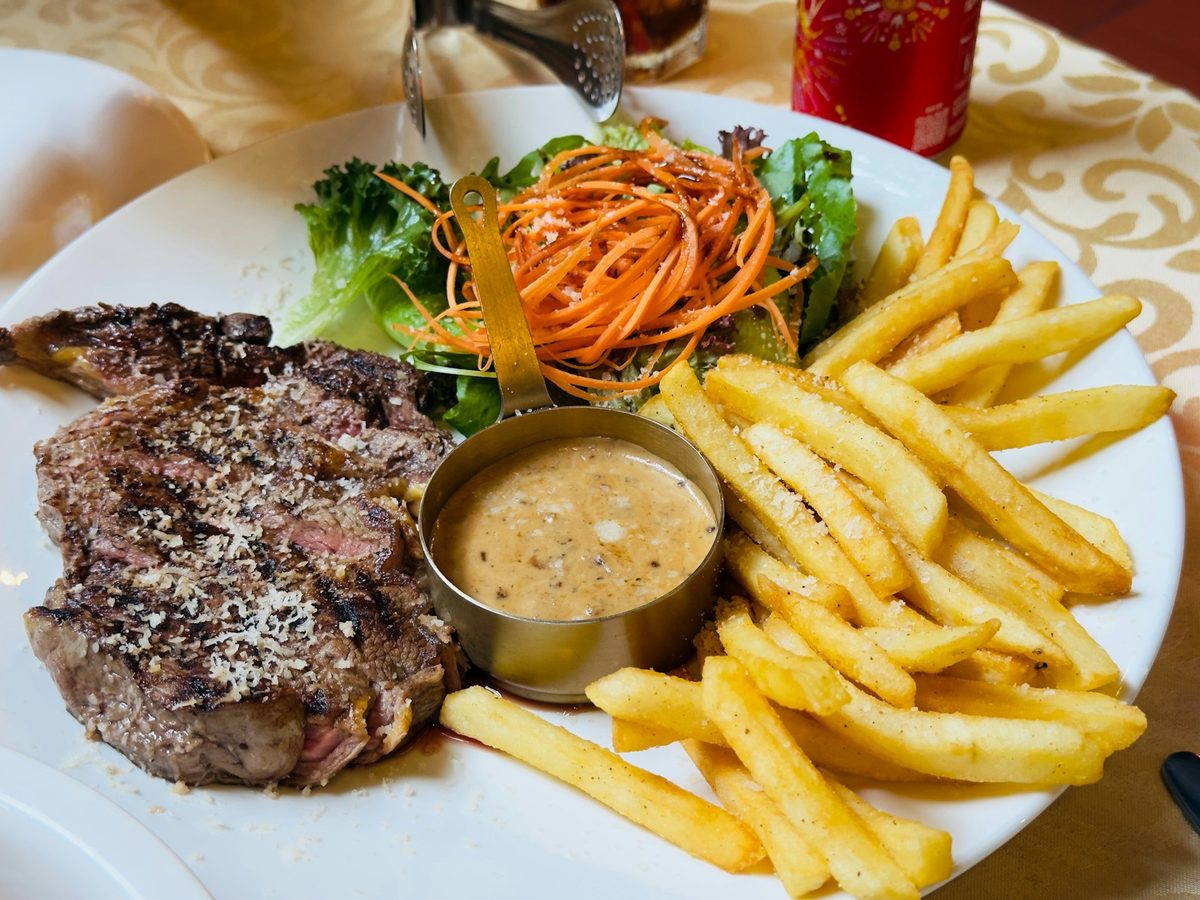
A thick steak crusted with crushed black pepper, seared in a hot pan and served with a brandy and cream sauce made in the same pan. A Paris bistro classic, made with a Canadian AAA rib-eye.
Rib-eye is my cut for steak au poivre. It's the entrecôte of a French bistro, and the seam of fat through the middle bastes the meat while the pepper crust forms, so it forgives an extra minute in the pan. Canadian AAA rib-eye is usually more marbled than French bistro beef, which makes it richer, and it browns fast in its own fat.
Supermarket rib-eyes are often cut thinner than a bistro steak, so for this one I'd go to the meat counter instead of grabbing a pack. Striploin works too, if it looks better that day.
Steak au poivre is a thick steak pressed into crushed peppercorns, seared hard, then served with a sauce of shallot, brandy and cream made in the same pan. It's a Paris bistro plate, with fries.
Entrecôte is rib-eye, faux-filet is striploin
Those are the two French cuts for this, and both are at any Canadian meat counter. Rib-eye is the richer of the two; striploin is leaner, with a firmer bite. Either way, ask for steaks 3 cm thick, because thinner ones cook through before the pepper crust forms.
Why crush the pepper yourself?
Pre-ground pepper is a fine powder that burns in a hot pan and tastes harsh. Crushed whole peppercorns stay in rough pieces, and the finished crust should be dark and crunchy, with a sauce that turns pale tan from the meat juices.
No cast-iron pan?
A heavy stainless steel frying pan works just as well. Non-stick doesn't: it won't build a crust, and it leaves no brown bits in the pan for the sauce.
Making it in Canada
The 3 French ingredients, and what to buy for them in Canada.
Entrecôte ou faux-filet→AAA rib-eye, 3 cm thick (or striploin)
Entrecôte is the rib-eye and faux-filet the striploin (sometimes sold as New York strip). Rib-eye has more fat running through it, which keeps it juicy and forgiving; striploin is leaner and firmer, and cooks the same way.
🛒 Look for AAA on the label. If the pre-cut steaks are thinner than 3 cm, ask the meat counter to cut two thicker ones.
Cognac→Any VS brandy from the liquor store
Cognac is a brandy from one region, so it works too, but a cheaper brandy does the same job in a sauce: the alcohol cooks off and leaves a sweet, warm note. Don't use flavoured brandy, and skip whisky, which turns the sauce smoky.
🛒 Buy the smallest bottle of VS brandy your liquor store has; a 375 mL bottle covers several batches.
French crème entière is about 30% fat. Lighter Canadian creams (10% or 15%) can split when they boil; 35% whipping cream reduces into a smooth, glossy sauce. In Quebec, 35% cooking cream works the same way.
🛒 Lactantia 35% whipping cream comes in a 237 mL carton at Sobeys-group stores; Walmart carries Sealtest 35%.
Good to know: For the green peppercorn version, look for green peppercorns in brine in a fine-food aisle or specialty shop, if you see them. If you can't find a jar, make the black pepper version: dried green peppercorns stay hard in the sauce.
Ready to cook?
Steak au Poivre
A thick steak crusted with crushed black pepper, seared in a hot pan and served with a brandy and cream sauce made in the same pan. A Paris bistro classic, made with a Canadian AAA rib-eye.
Prep time
15 min
Cook time
15 min
Resting time
5 min
Total time
30 min
Servings
2
Rest the steak for 5 minutes; this overlaps with making the sauce.
Ingredients
Original recipe: 2 servings.
Instructions
Crush the pepper. Put the peppercorns in a zip-top bag and crush them coarsely with the bottom of a heavy pan. You want rough pieces, not powder. Spread on a plate.
Coat the steaks. Pat the steaks dry, season both sides with salt, then press each side firmly into the pepper so it sticks.
Sear. Heat a heavy cast-iron or stainless steel frying pan over high heat until very hot. Add the oil, then the steaks. Cook 3–4 minutes per side for medium-rare, without moving them, until a dark crust forms. Take them off at 52–54°C (125–130°F) on an instant-read thermometer; they rise a few degrees as they rest.
Rest. Move the steaks to a warm plate and let them rest 5 minutes while you make the sauce.
Start the sauce. Lower the heat to medium and pour off the fat: rib-eye leaves more than striploin, and any of it that's burnt makes the sauce bitter. Add the butter and shallot and cook 1 minute, scraping up the brown bits.
Add the brandy. Take the pan off the heat before pouring in the brandy, then return it to medium heat and let it bubble until reduced by half. If it catches fire, let the flames die down on their own.
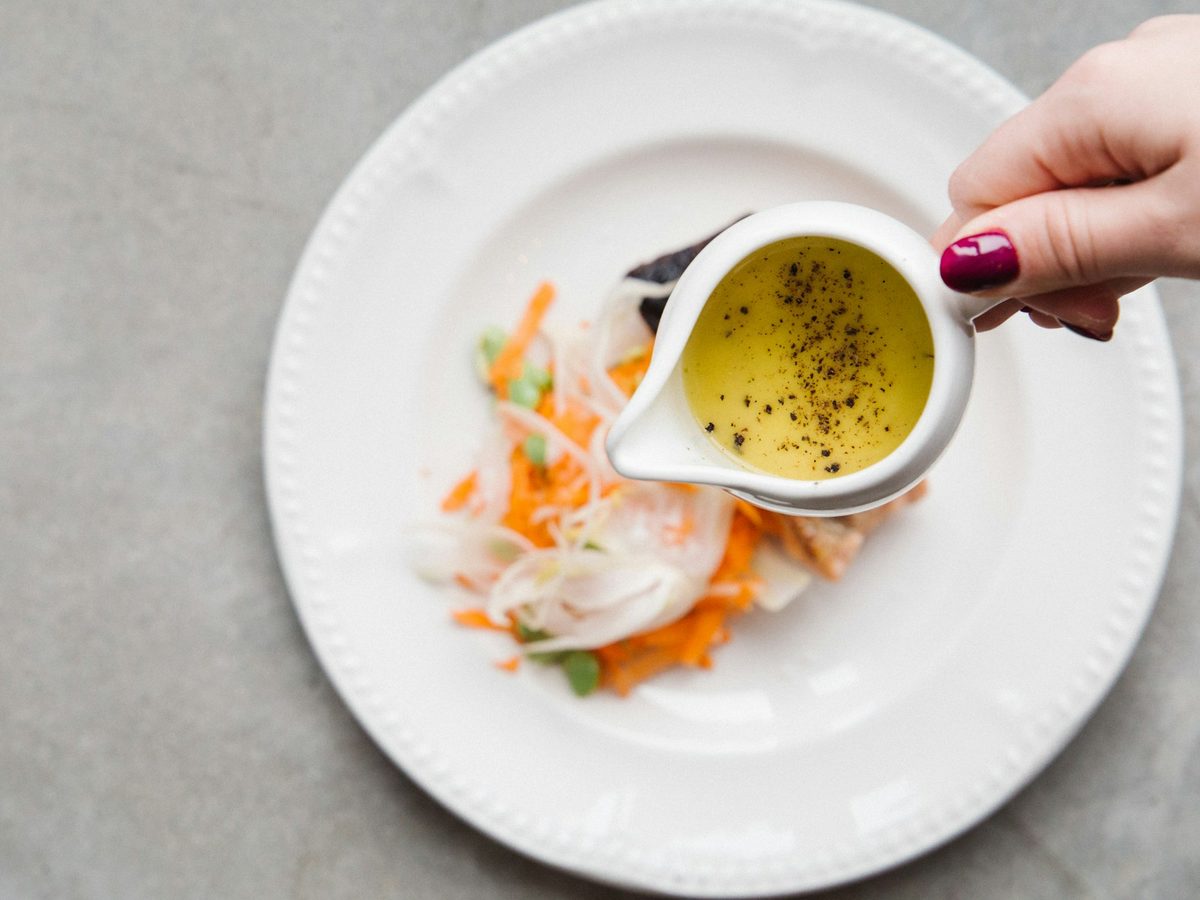
Finish with cream. Add the cream (and broth, if using) and any juices from the resting steaks. Simmer 2–3 minutes, until the sauce coats a spoon. Taste for salt and spoon over the steaks.
Notes
For medium, cook 4–5 minutes per side and take them off at 57–60°C (135–140°F).
Health Canada recommends cooking steak to at least 63°C (145°F).
Steak au poivre vert: skip the pepper crust, sear the salted steaks plain, and add 1 tbsp drained green peppercorns in brine, lightly crushed, with the cream.
For a steak thicker than 4 cm, sear both sides, then finish it in a 200°C (400°F) oven until it reaches temperature, and make the sauce on the stovetop while it's in there.
Turn on the kitchen fan before you start: the pepper crust smokes.
Serve with fries, a green salad, or both, as in a Paris bistro.
Course: Mains · Cuisine: French · Adapted for Canadian kitchens
Made this? Send it to whoever you're cooking for next, or pin it for later.