I make crème brûlée for guests here, because everything is done ahead and the torch is the only last-minute job. The thing to watch in Canada is brown sugar. It's soft and moist, and it clumps into little lumps in the bag, so it won't scatter into an even layer and melts in sticky patches instead of one clean sheet.
That's why I keep demerara for the tops: its dry crystals spread evenly and crack like the brasserie version. If brown sugar is all you have, spread it on a plate to dry for a few hours and rub out the lumps between your fingers before you sprinkle it.
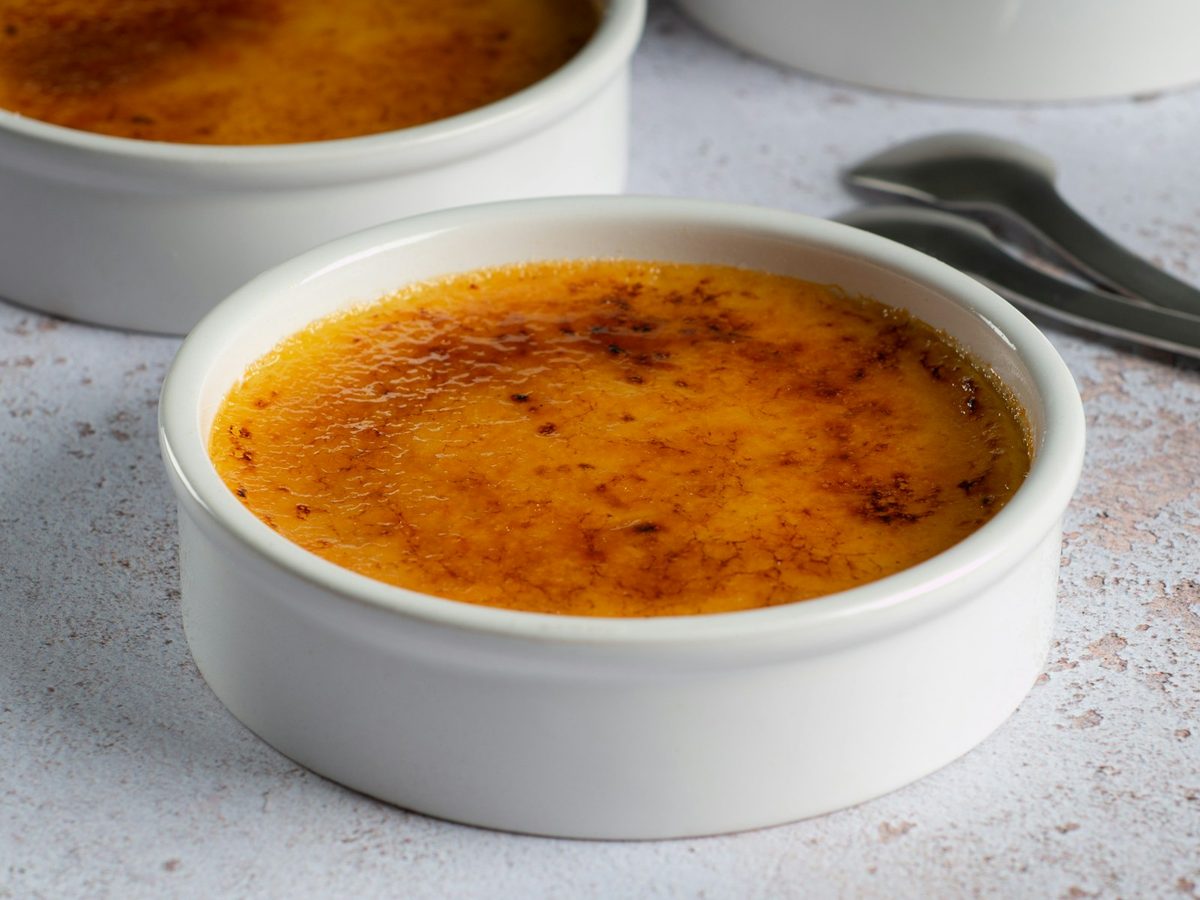
Crème brûlée is a vanilla custard of cream and egg yolks, baked gently in a water bath, chilled, then topped with sugar you melt into a glassy crust just before serving. It's a French brasserie classic, and the custards wait in the fridge for up to two days. Two things trip people up in Canada: the cream and the sugar.
Which cream: 35% whipping cream, not cooking cream
French recipes say crème liquide entière, which is 30–35% fat. Here that's 35% whipping cream, in every dairy case. In Quebec, don't grab the 15% crème à cuisson next to it: 15% cream doesn't have the fat to set a custard, and it bakes loose and watery.
Cassonade isn't cassonade here
French recipes often say cassonade for the top, meaning dry, golden raw cane sugar. In Quebec, cassonade is soft brown sugar, which melts into a sticky layer instead of a crisp one. Buy demerara or turbinado instead, in the baking aisle next to the brown sugar.
Why a custard turns grainy
Out of the oven, the edges are set and the centre jiggles like jelly. After chilling, the custard should be smooth and thick, like soft-set pudding. A grainy texture or bubbles on the surface mean it baked too hot or too long, so trust the jiggle and a low oven over the clock.