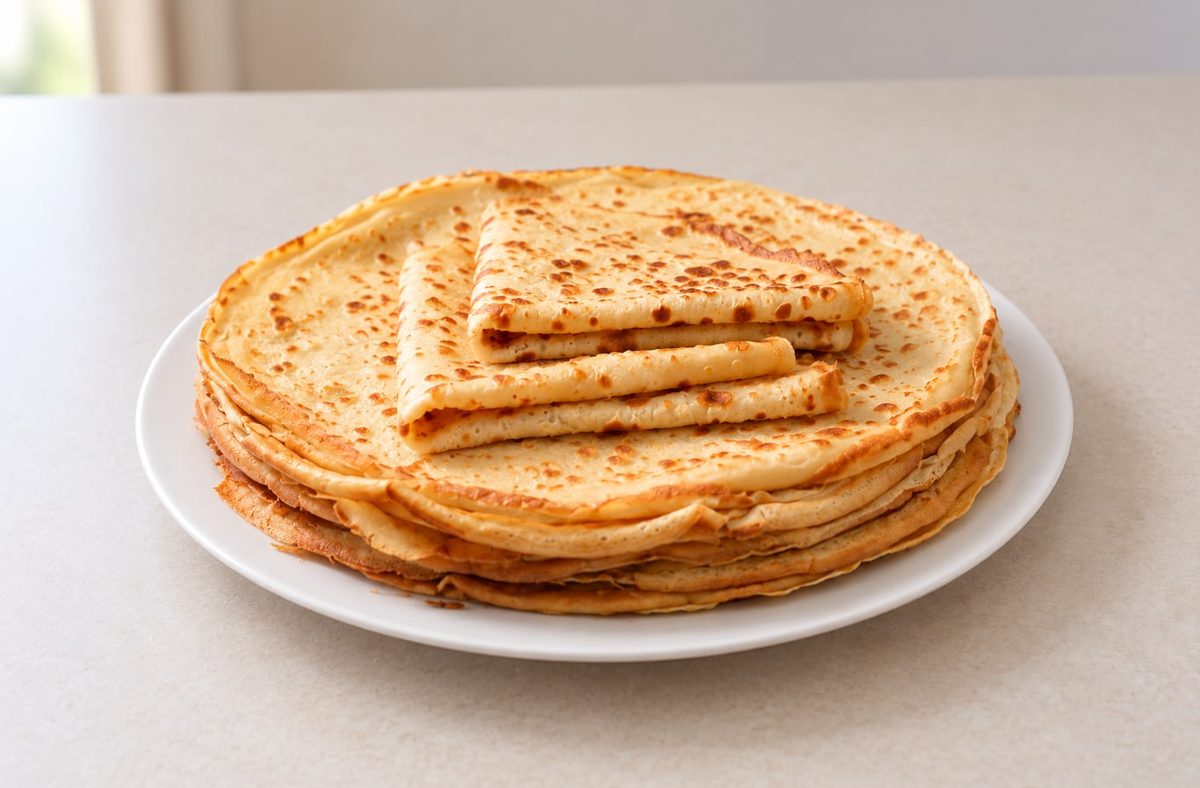
Thin, tender French crêpes made from flour, eggs, milk and melted butter, rested an hour and cooked in a hot pan. Eaten with sugar and lemon, jam or chocolate, and in Canada, with maple syrup too.
I make crêpes myself, and my friends here eat them differently from the way they're usually eaten in France. A French crêpe evening often means five or six thin crêpes each, with sugar, jam or chocolate. Most of my Canadian friends would rather have one or two big crêpes stuffed with a lot of filling, closer to a meal than a goûter.
So I make the same thin batter and change only the filling. The crêpe stays thin, the filling goes in the pan, and it comes to the plate folded into a fat square parcel.
Crêpes are thin, soft pancakes of flour, eggs, milk and melted butter, cooked about a minute a side in a hot pan and eaten folded in four with sugar and lemon, jam or chocolate spread. They come from Brittany, but every French kitchen makes them, for breakfast, goûter or dessert. For the savoury buckwheat version, there's the galette complète.
How do you fill a crêpe generously?
Keep the crêpe thin and put the weight in the filling: a thick crêpe under a big filling turns heavy and doughy. Fill it in the pan, while it's still warm, so the filling heats through and the crêpe stays soft enough to fold without tearing.
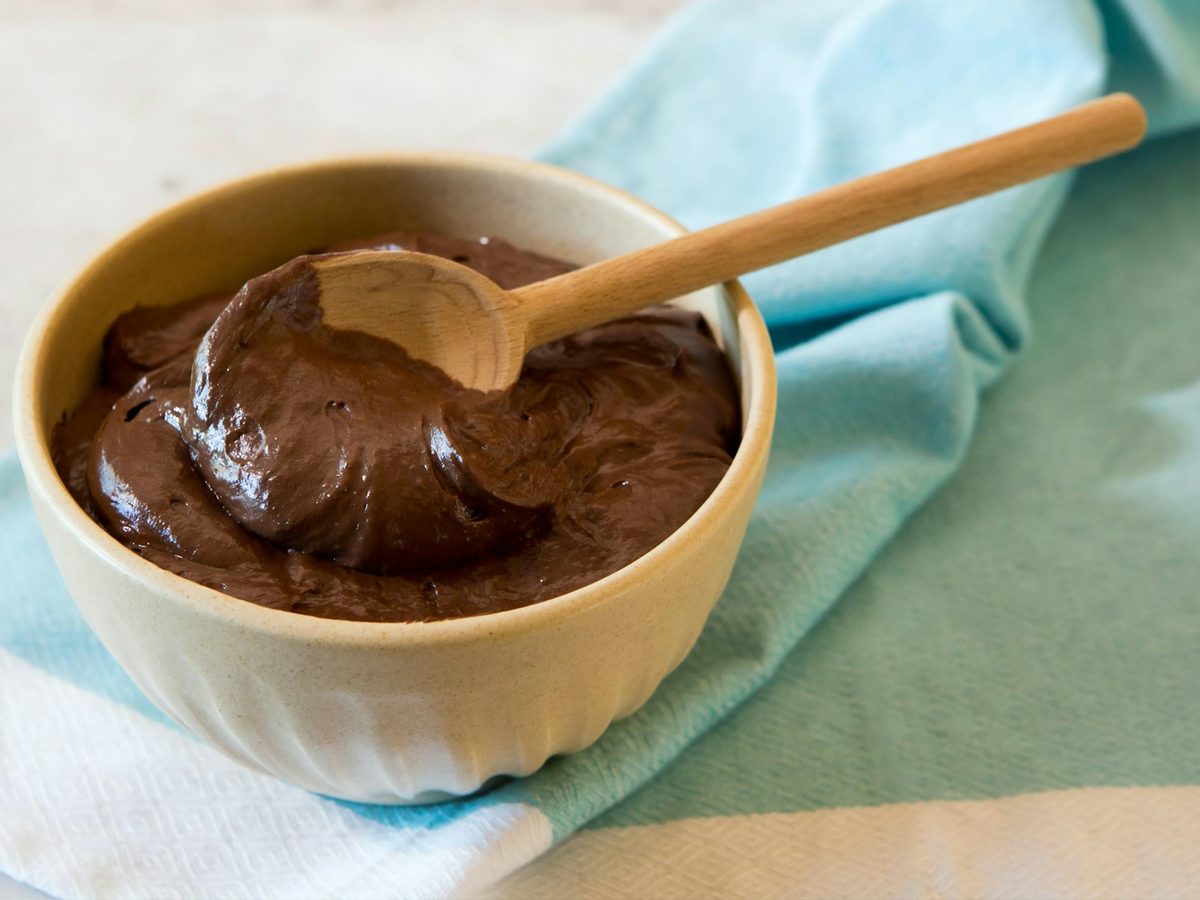
Sweet: sliced banana with chocolate-hazelnut spread, or strawberries with whipped 35% cream added once it's on the plate.
Savoury: a slice of plain cooked ham, a handful of grated Emmental and an egg cracked on top, cooked until the white sets. For the buckwheat version, see the galette recipe.
Does Canadian flour change the crêpes?
A little. Canadian all-purpose flour has more protein than French T45 or T55, so the batter develops more gluten as you whisk it. Rest the batter at least an hour: it matters even more here than in France, and skipping it gives slightly rubbery crêpes.
Do you need a crêpe pan?
No, but it helps. A 24 cm carbon-steel crêpe pan has low sides and browns evenly, and a 24 cm non-stick frying pan with low sides works almost as well. The galette complète recipe lists where to buy a crêpe pan in Canada.
Making it in Canada
The French ingredient, and what to buy for it in Canada.
Farine T45 ou T55→All-purpose flour (Robin Hood or Five Roses)
French crêpe flour is about 9.5–11% protein; Canadian all-purpose is about 13%, which makes a slightly chewier crêpe. The hour's rest relaxes it. For a slightly softer crêpe (optional), replace 50 g of the flour with cake & pastry flour.
🛒 Robin Hood all-purpose is at Walmart and Sobeys, and Super C carries its unbleached version. Five Roses, the Quebec heritage brand, is at Super C, Sobeys and Walmart. Robin Hood Best for Cake & Pastry flour is at Walmart in 2.5 kg bags.
Good to know: Buckwheat flour for galettes is sold in many Canadian stores, especially in Quebec and New Brunswick, where buckwheat pancakes have their own long tradition.
Ready to cook?
Crêpes
Thin, tender French crêpes made from flour, eggs, milk and melted butter, rested an hour and cooked in a hot pan. Eaten with sugar and lemon, jam or chocolate, and in Canada, with maple syrup too.
Prep time
10 min
Cook time
30 min
Resting time
1 hr
Total time
1 hr 40 min
Servings
6
At least 1 hour at room temperature, or overnight in the fridge.
Ingredients
Original recipe: 6 servings.
Instructions
Start the batter. Mix the flour, salt and sugar in a large bowl and make a well in the centre. Add the eggs and whisk, drawing in the flour gradually.
Add the milk. Whisk in about half the milk, a little at a time, until you have a smooth, thick batter with no lumps. Then whisk in the rest of the milk, the melted butter and the rum, if using.
Rest. Cover and leave at least 1 hour at room temperature, or overnight in the fridge. The batter should be like whipping cream; thin it with milk if needed.
Heat the pan. Heat a 24 cm crêpe pan or non-stick frying pan over medium-high heat. Wipe it with a little butter on a paper towel.
Cook. Pour in about 60 mL of batter while tilting the pan so it covers the bottom thinly. Cook about 1 minute, until the edges lift and the underside is golden, then flip and cook 30 seconds.
Stack. Slide onto a plate and repeat, buttering the pan every two or three crêpes. Stack them as you go: they stay soft and warm.
Fill them generously (optional). For one or two big filled crêpes per person, put a cooked crêpe back in the pan over medium heat. Spread about 80–100 g of filling over the centre. For ham and cheese, warm it 1–2 minutes until the cheese melts; with an egg, crack it in the middle, spread the white with a spoon and cover the pan 3–4 minutes, until the white is set. Fold the four sides in to make a square and slide it onto a plate.