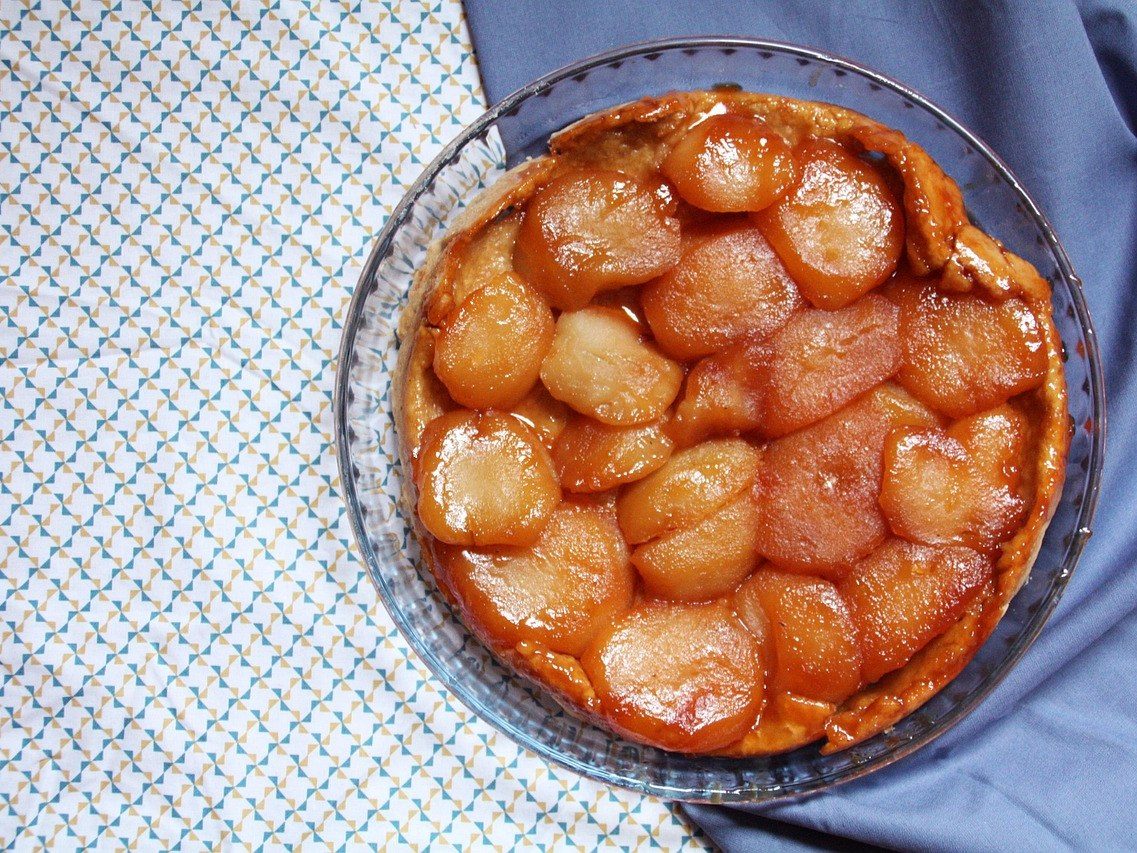
I make my tatin with shortcrust, a plain butter pâte brisée, not puff. It stays crisp under the caramel juice instead of going soggy, and it gives a firm base you can cut a clean wedge from. In Canada it's also the easier choice: the puff pastry in most freezers has no butter in it, while a pâte brisée takes ten minutes with flour and butter from any supermarket.
Tarte tatin is the French apple tart turned on its head: apples cooked in caramel, pastry laid on top, then the whole thing flipped so the fruit ends up dark and glossy. Three things decide it, and each has a Canadian answer: the apple, the pastry and the colour of the caramel.
Which Canadian apple holds up in caramel?
The apples spend close to an hour in caramel, first on the stove and then in the oven, so they have to soften without collapsing. French cooks use Golden or Reine des Reinettes, a firm, sharp apple that isn't sold here.
My pick is Golden Delicious, the same variety French cooks use, with a couple of Granny Smith for the sharpness a Reinette would bring. Canada grows a lot of apples that are better raw than cooked, and the favourites for eating, like McIntosh and Gala, turn to sauce in caramel.
Why shortcrust, and when puff?
Shortcrust is as traditional on a tatin as puff. It doesn't rise, but it soaks up a little caramel at the edges, and it has to be a butter pastry, so make it: it's flour, butter, a yolk and a little water.
If you'd rather use puff, read the ingredient list. Tenderflake, the box in most freezers, is margarine with no butter; PC Butter Puff Pastry and, in Quebec, Première Moisson pur beurre are two that list butter.
How dark should the caramel go?
Take it to a deep amber, about the colour of maple syrup, before the apples go in. Pale caramel gives sweet, beige apples. Turned out, they should be shiny and mahogany at the edges, soft enough for a fork but still in quarters.