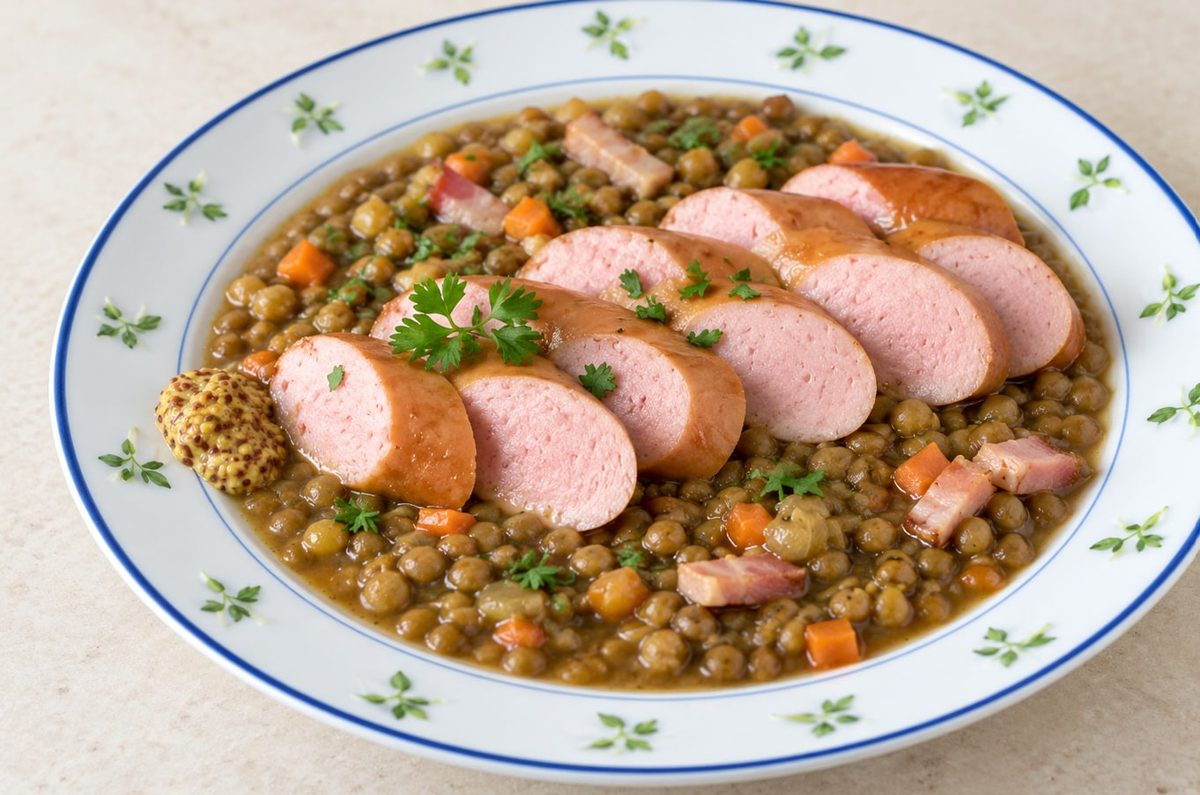
For the smoked sausage in a choucroute or a dish of lentils, buy smoked kolbassa from the deli case and add it near the end. For saucisse de Toulouse, buy a plain, coarse pork sausage with no fennel. Most French charcuterie has a Canadian stand-in: what matters is which label to read and what changes in the pot.
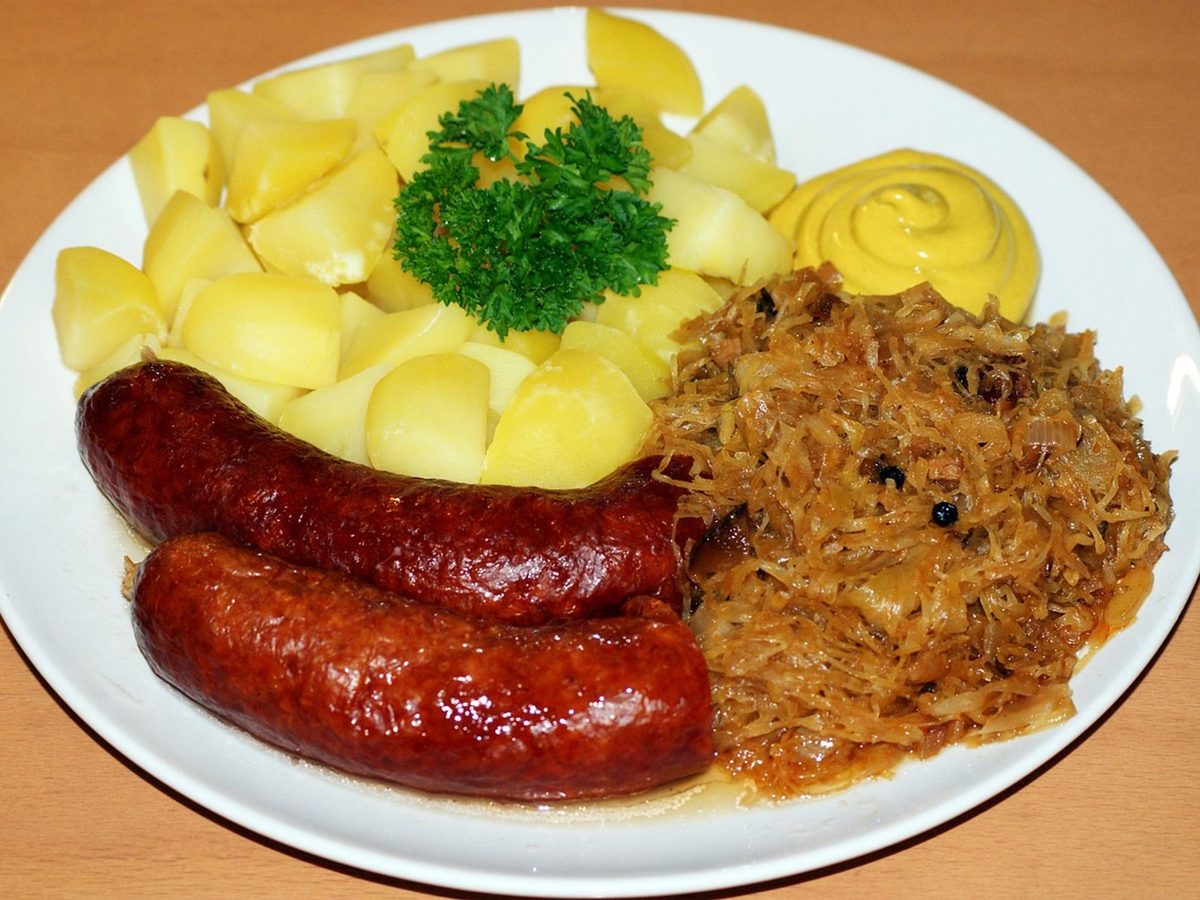
I'm Alsatian, so the sausages in a choucroute matter to me. When there's a European butcher nearby, that's where I buy the sausages: their smoked sausages and knacks come closest to the ones on an Alsatian platter. Otherwise it's kolbassa and the other smoked sausages from the supermarket deli case, and that still makes a good choucroute.
If you go the supermarket way, buy two or three kinds rather than one. A choucroute garnie in Alsace always has several meats on the platter, and the mix hides the fact that none of them is quite a Montbéliard.
Morteau and Montbéliard: smoked kolbassa, added late
Morteau and Montbéliard are smoked pork sausages from Franche-Comté, and they're sold raw. A Morteau simmers 30 to 40 minutes with the sauerkraut or the lentils and gives its smoke to the whole pot.
The Canadian answer is smoked Polish kolbassa, the spelling on Canadian labels for kielbasa, shelved in the deli section. Piller's Kolbassa (375 g) is listed at Metro and Loblaws, and the Schneiders Kolbassa ring (300 g) at Metro and Voilà by Sobeys.
Two things change. Kolbassa is already cooked, so it goes in for the last 15 minutes instead of 30 to 40, or it turns rubbery. It also tastes more of garlic than a Morteau, so go easy on garlic elsewhere in the dish.
Strasbourg sausages and knacks: European wieners
Saucisses de Strasbourg, knacks in Alsace, are thin, lightly smoked and fully cooked, in a natural casing that snaps when you bite. North American hot dogs are thicker and softer, with no snap.
Look for wieners labelled natural casing: Piller's European Wieners (450 g, sheep casing, lightly smoked) are listed at Voilà by Sobeys. If your store doesn't carry them, read the wiener labels in the deli case for 'natural casing' or 'sheep casing'. Skinless hot dogs never snap. Warm them about 10 minutes in water that's steaming but not bubbling. Boil them and the casing splits.
Toulouse sausage: plain pork, no fennel
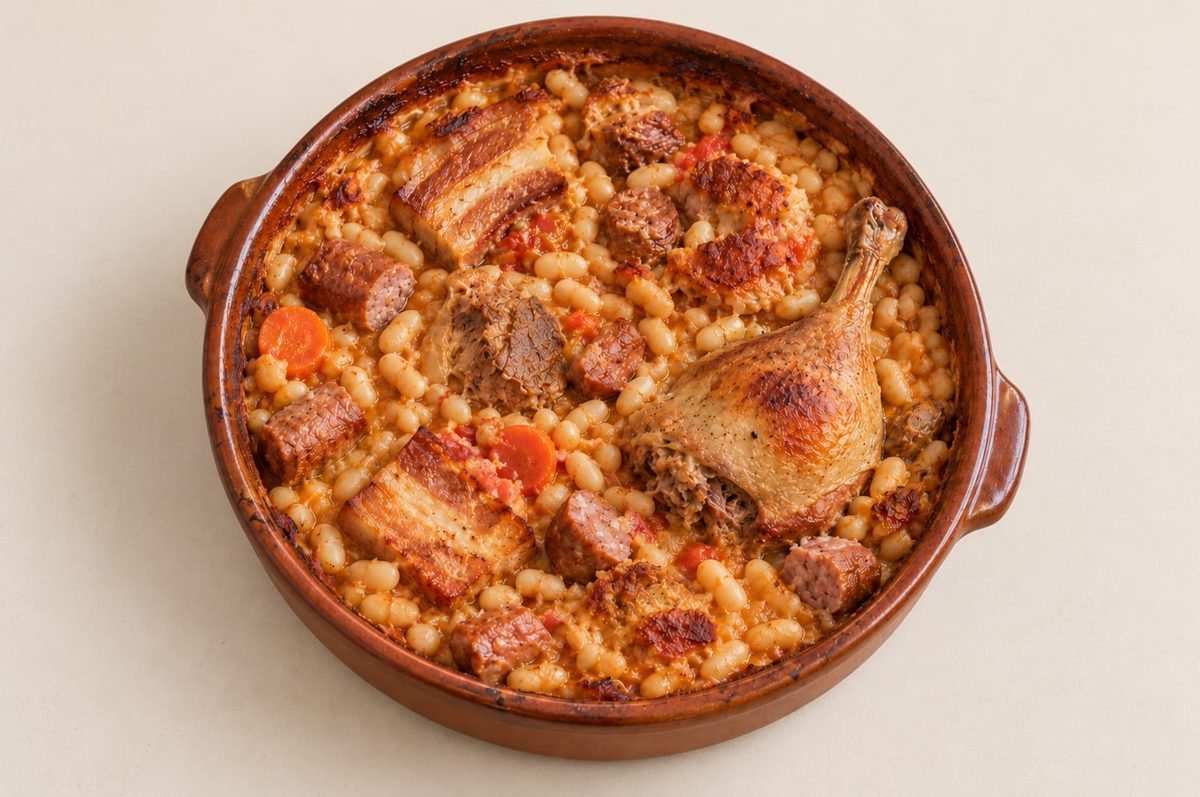
Saucisse de Toulouse is fresh, coarsely ground pork with salt and pepper, and it's the sausage in a cassoulet. In Quebec, Metro sells it by name: Furca, Plaisirs Gastronomiques and DuBreton organic Toulouse sausages are all listed.
Elsewhere, read the label. Mild on a sausage pack usually means mild Italian, which tastes of fennel, and breakfast sausage is too finely ground and too sagey. Real Canadian Superstore lists a Dalisa pork sausage combo (900 g) with Toulouse links, but they contain wheat crumbs and soy flour, so they're softer than a French Toulouse. Brown them hard before they go into the cassoulet. A butcher counter can also sell you plain pork sausage if you ask for no fennel and no herbs.
For chipolatas, the thin sausages of a French barbecue, buy the thinnest plain pork sausage you can find. Breakfast links are the right size but taste of sage.
Andouille, andouillette and merguez
- French andouille and andouillette are tripe sausages, with a strong taste people either love or refuse. The andouille sold in Canada is Cajun: a smoked, spicy pork sausage. Don't swap one for the other. If a French recipe is built on andouillette, choose another recipe.
- Merguez, the thin, spicy lamb or beef sausage of North African cooking, is usually easiest to find at a halal butcher.
Boudin noir: easy in Quebec, harder elsewhere
In Quebec, boudin noir is a supermarket item. Metro lists Charcuterie Charlevoisienne boudin noir (240 g) and Trois cochons gourmands, in the meat aisle with the offal.
Outside Quebec, no national chain lists it. Ask a butcher or a European deli for blood sausage: Spanish morcilla and British black pudding are close, but both often contain rice, onion or oatmeal, so they're firmer and grainier than boudin noir. Fry slices gently in butter, and serve them with apples cooked in the same pan, the French way.
Saucisson sec and jambon cru
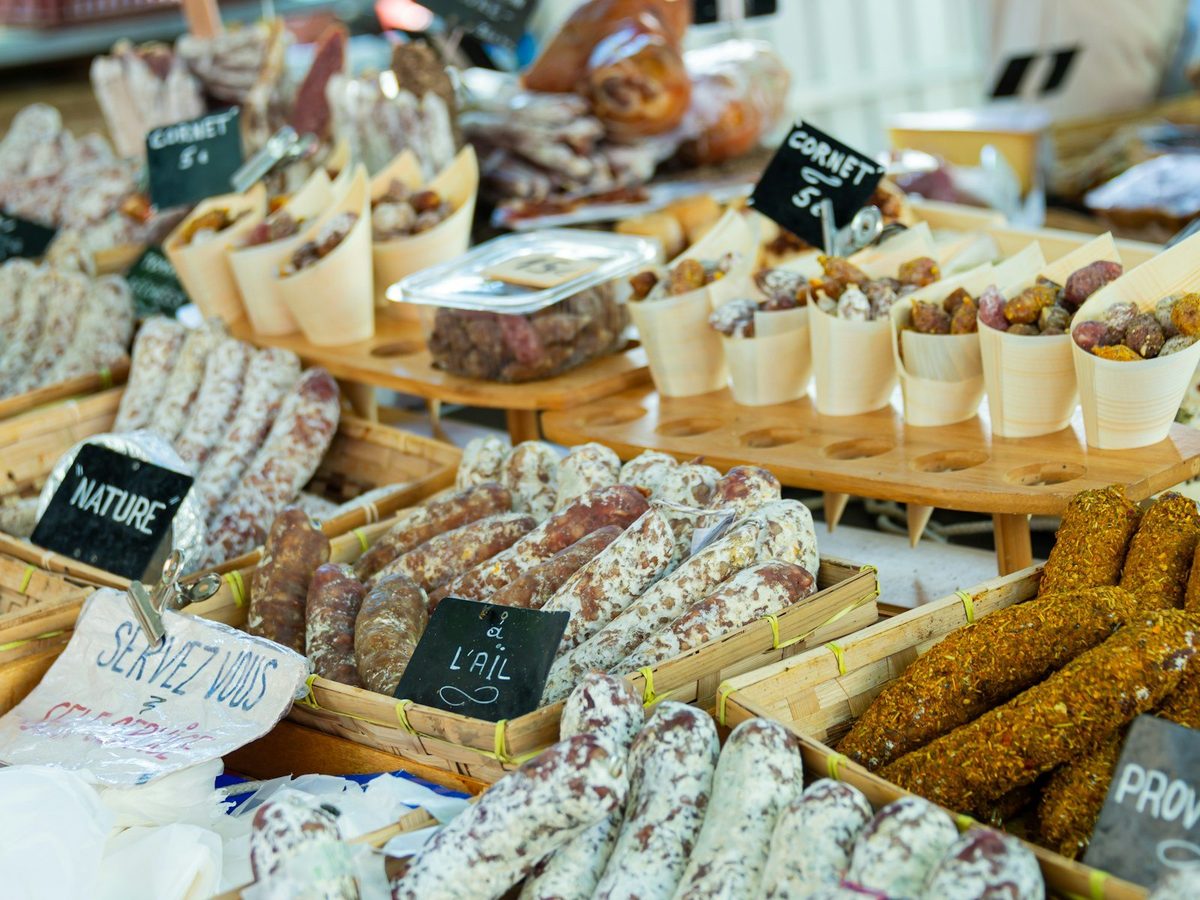
For saucisson sec, look for a whole stick labelled dry-cured, not cooked salami and not pepperoni, and slice it yourself. It should feel firm and look coarse when cut. Genoa-style salami is the closest common type, though it's finer and often more garlicky.
Jambon cru, from Bayonne or Savoie, becomes prosciutto or Serrano. The ham guide covers those, and jambon blanc too.
Lardons and salt pork
Lardons have their own lardons guide. Salt pork, lard salé, isn't only a Quebec product: Metro and Maxi sell it in Quebec, and Loblaws lists cured salt pork. It's saltier than bacon, so blanch it 2 to 3 minutes in boiling water before it goes into a choucroute garnie.
Duck confit for a cassoulet
A cassoulet needs Toulouse sausage (above) and duck confit. Confit duck legs are sold ready to use: Lac Brome at IGA, and Plaisirs Gastronomiques (500 g) at Maxi and Metro. Outside Quebec, Costco.ca sells a case of 24 confit legs online, which is a lot of confit for one pot.
Pâté, rillettes and terrine
Deli-counter pâté varies a lot from store to store, and French-style rillettes are rare. Both are easy to make: pork shoulder, pork belly and chicken livers are in every meat case. Start with pork rillettes, then a country pâté, which keeps in the fridge for days.
Can you bring charcuterie back from France?
Not if it's fresh, dried or cured: saucisson, jambon cru and pâté from the charcuterie counter stay in France. A sealed tin of commercially canned meat, like rillettes or confit, has separate conditions, and CFIA says its import conditions for meat from the EU are under review.
Check CFIA's current rule for France before you pack anything with meat in it, and declare all food at the border. The guide to bringing food back from France covers the rest of the suitcase.